 |
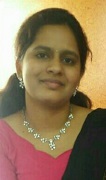
| Dr Siri |
Dr Siri is a prolific poet and writer, mainly for children. A dentist by
qualification, she has been fully drawn into creative literature and service to
the differently abled section of children. In recognition of her contribution
to the field of children’s literature, the Telangana government feted her with
the ‘Vishishta Mahila Puraskar’ for 2018. Some of her books have been
translated into Hindi, Urdu and Tamil; and the translations into Marathi,
Sanskrit, English, Kannada, and Koya are in press. With a view to acquainting
the readers with her literary endeavours and philanthropic bent of mind, AtreyaSarma, Chief Editor of Muse India, engages her in the following
conversation.
***
Atreya Sarma U (ATREYA):
Dr Siri, you’ve a very large output of children’s stories and also poems,
during your literary journey. How many of your stories and poems have been
published so far? How many books you have published so far? How could you
produce such a massive output considering that you are young yourself?
Dr Siri (SIRI):
Thank you. Among my works, over 200 of poems, 200 crosswords, 200 stories for
children, 20 stories for adults, besides lyrics for children, reviews,
articles, and translations have been published.
My playlet ‘Urishiksha’ (Death Sentence) has been
broadcast by the All India Radio (AIR). About 300 of my children’s stories have
been featured in the animation form in the Lollipop App. The App also contains
the simplified stories for children I did from the Mahabharata as well as four
of my lyrics composed for and sung by children. I have also penned the title
song for the Lollipop App.
ATREYA:
Why have you chosen children’s literature as your main writing activity? Who or
what factors have motivated you into it? And what do you want to achieve
through it?
SIRI: Right from the
beginning, be it in the surroundings of my home or wherever I go, I find a
number of children around me. To many people, children are those with their
conspicuously endearing smiles and naughtiness. But children have their other
side too. Their minds simmer with a maze of unexpressed fears, troubles, doubts
and questions. But unlike the adults, they can’t speak out their minds. All the
same, they churn up the unvoiced reflections in their minds to find out the
answers, and, in the process, they turn them into questions and raise them
before the elders. And most of the elders laugh away such questions as crazy
ones. But certainly, they are not crazy
questions, and I have realised this only after heartily and affectionately
interacting the children.
In fact, the stories I have created are meant to
answer such questions popping from the minds of children. It is only the
children and their questions that have made me a children’s writer. Whatever I
have written – lyrics, crosswords, stories, playlets – it owes it to the
children themselves and is meant only for them.
Children are like saplings. If we nurture them well,
they will grow up like strong and sturdy trees. And the entire world happily
lives under the canopy of such trees. If this has to turn into a reality,
children should be brought up in a happy and healthy environment.
It’s not just the physical but the mental health that
would cultivate good values of life. If children have to excel our generation
and be a torchbearer to the next generation with clarity and conviction, we
have to put them on a path of holistic progress and values. And the path I have
chosen is literature, since literature has the ability to influence humans and
their way of thinking. Most importantly, the impact that stories and lyrics
create on children is enormous and abiding. That’s why, ever since the dawn of
human civilisation, the art of telling stories to children has become an
integral part and parcel of every culture in the world.
If the literary output I have been creating is able to
spark off the positive feelings in our children even to a little extent and
help them at least step ahead, I feel that my mission has been fulfilled, and
that itself will be my greatest achievement.
ATREYA:
At what age did you get into writing? And who are the people who encouraged you
to your satisfaction?
SIRI: When I was ten, my
father spoke to me about Sarojini Naidu and mentioned that she penned her first
book when she was just twelve. It made an indelible imprint on my mind, and I
began writing ever since. But at that age, I didn’t know what constituted a “writing”
– what should be written about, or how it should be written. Yet, I went ahead
with my writing activity, letting out my thoughts in the words that I knew.
When I entered my eighth grade, I showed some of them to my teachers, and they
commented, “You’ve written well. There is meaning and rhythm in what you’ve
written. And it’s readable. Now write them down on the blackboard, so that
everyone can read them out.”
The compliments from the teachers encouraged me, and
writing has become my breath ever since. And I have benefited a lot by the
advice, guidance and appreciation received from many other elders like – noted
film actor and writer Ravi Kondala Rao who read through all my works; ‘Padma
Shri’ recipient KC Sivasankaran (famous illustrator for the Chandamama
monthly); renowned film lyricist and ‘Padma Shri’ recipient Sirivennela
Seetharama Sastry; well-known writer Kalipatnam Rama Rao; and film writer
Esukapalli Mohana Rao. Especially, veteran Ravi Kondala Rao volunteered to be
my benign guru, and illumined me on various aspects of literature with a
fatherly affection.
I also owe my gratitude to my parents, siblings,
husband, mother-in-law, and friends whose support has been steadfast and solid
all the while.
ATREYA:
You are a dental doctor by qualification, but are you doing your practice? If
you have to choose between dental profession and children’s literature, what
would you prefer?
SIRI: The dental profession
and the art of writing are independent of each other, and either of them is
important and distinguished in its own way. But if should prefer only one of
them, I would certainly vote for children’s literature.
ATREYA:
Your writing is in Telugu, your mother tongue. It’s a stark reality that for
many years Telugu language has come to be neglected as a medium of study or
creative expression. As a result, the standards of Telugu have been declining. And
so is the interest in reading of Telugu books plummeting on a downward slope. It
has become a fashion to routinely adulterate Telugu with English words, whether
called for or not, as a kind of craze or fashion. Under such circumstances, how
is the demand for Telugu books in general and especially yours? And what should
be done, in your view, to promote the study of Telugu among the Telugu people?
There are alarm bells signalling that Telugu would disappear before long from
the scene of languages. What do you have to say about it?
SIRI: What you say is not far
off the truth. Somehow, when it comes to the question of our association with
English language, we tend to feel a sense of false prestige. And when it comes
to our mother tongue, we tend to belittle it and as if speaking in Telugu is a
waste or offence. Our attitude needs to change and we should realise the
importance of adoring our mother, mother tongue and motherland. The fancy for
English has certainly brought down the number of readers in Telugu, but only to
some extent and not wholly.
We may be reading and speaking in several languages,
but the way our mind-cum-heart resonates when we speak and read in our own
mother tongue, the vibes that come out are quite distinct. We feel a sense of
closeness and ineffable intimacy. This type of alchemy and love of mother
tongue promotes the popularity of Telugu literature. Luckily, still there are a
good number of Telugu lovers and readers, and it is precisely this factor that
has made my books, like those by many others, popular enough. The lion’s share
of my literary creation goes out to children, and it’s encouraging for me that
they hold my books dear to their heart.
I don’t agree that Telugu is going to be extinct. I do
believe that the flag of Telugu language is going to fly high for the reason
that during the last four years, hundreds of children have put pen to paper and
come out with thousands of their works. As many as 300 books have come out of
the hands of children below 15 years of age. It’s certainly a silver lining for
our cute, sweet Telugu language. So, where’s the question of Telugu
disappearing from the scene?
ATREYA:
You have been conducting writing workshops for children. Please share your
experiences – how many workshops you have conducted? At how many places? How
many children have partaken so far in them? How many of them have turned into
good writers? Who have been cooperating with you in this welcome venture? And
how do you feel about all this exercise?
SIRI: I have been taking part
in the writing workshop for children and teaching them the techniques of
creative writing for the last ten years. Some of these workshops were organised
by me with the support of the schools concerned. And I served as a resource
person in the workshops conducted by organisations like the Telangana Sahitya
Akademi, Dr Madabhushi Rangacharya Smaraka Samiti, and Rangineni Trust. For two
years during the time of the Corona pandemic, I participated in the online
workshops convened by many literary organisations.
Hundreds of children have taken part in the workshops.
And about 200 of them have turned into good published writers, and besides
penning poems and stories, some of them have brought out even Satakams, a posy
of one hundred or slightly more metrical poems, mostly of ethical values.
What’s the use of children writing stories? Many ask
this question. Here I’d like to share a relevant experience. A few years ago, I
organised a writing workshop in a government school in a village. About 200
children joined it, and I held a competition in story writing. The winner was a
girl, eight years old. I walked down to congratulate her. But she didn’t utter
a word despite my continued persuasion. After reading her story, I felt that
either her mom or dad or maternal granny or paternal grandma or grandpas must
have been telling her stories every day.
Noticing my vain attempts at making the girl open her
mouth, the headmaster approached me and said, “Madam, this girl hardly speaks
to anyone. Her father had passed away, and her mother is ill. The girl doesn’t
have anyone except her mom. As soon as the school closes for the day, she runs
out to find some chore or the other to eke out a few rupees for survival. On
every holiday, she works as a farmhand. The little one keeps all the pain to
herself, not sharing it with anyone. We know all these things, because we are a
first-hand witness. We too have tried our best to make her open up.
Though she is not forthcoming, she never neglects her
studies. She is very intelligent. The quality of her story must have proved it
to you.
Unable to contain my empathy and sympathy for her, I
said, “My darling, I am like your elder sister. Won’t you please share your
suffering with me?”
“That’s why I’ve written the story,” the girl
muttered.
In another workshop in 2017, I happened to hear the
same type of heart-wrenching words coming out of one Sugandhi. There is a gap
in their ages and in their life stories, but the flow of tears was the same. To
wipe away the tears, to be brave and resolute, both of them chose the same
medium – and it is literature.
Now let’s go back to another workshop in 2019. I asked
one of the participants, “What expectations made you attend this workshop?”
“I’d like my father to give up drinking and take care
of the family he has been neglecting? I feel that that the story I am going to
write should bring about the change in him. But I don’t know how to write a
story; that’s why I am here,” said the boy.
And he did write the story, and it not only got him
the prize but also changed his father for good.
When he was receiving the prize, his mom said, “Madam,
I had tried my best to bring my husband to his senses, but I failed. But my
sonny has written just one story, and with that he has saved our entire
family,” wiping her tears.
I have come across countless experiences like these.
The background of each story penned by such children is too big and intense for
one’s imagination. The writing workshops are meant not only to identify and tap
the children’s creativity but also help them pour out their sufferings, thoughts
and emotions so that they could develop a sound personality. And I feel so
blessed to be a part of such transformative workshops.
ATREYA: Not
limiting yourself to story writing, you’ve been into social service –
succouring the needy and ‘disabled’ children. How do you get time and funds for
it? At how many places and how many children you have helped so far? Are there
any individuals or NGOs that are standing by you?
SIRI: Once, I happened to
read about the visually disabled in a magazine. After reading through the
piece, I felt that it was beyond one’s imagination to grasp the difficulties
and sufferings of the blind lot. This intense angst has made me to do my bit
for their cause. As part of this, I have been into narrating stories to them,
and teach them dancing. Likewise, I have been visiting the schools for the deaf
and telling stories to them.
ATREYA: It’s very touching that
you’ve produced audio books for the visually disadvantaged children. How many
such books you have brought out? What is the readers’ response? And what is
your experience in this line of activity?
SIRI: I have brought out 6
audio books containing 250 stories for the benefit of the blind children and
the cooperation I have received from the LV Prasad Eye Institute is very solid.
The books have been made available for free to all the schools for the blind in
both the Telugu states, and all the children who have listened to the stories,
have felt happy. And the most delightful thing is, some of them have begun to
write their own stories.
ATREYA:
Now let’s go back to your own childhood. Do you have anything special to share
from your childhood – from preschool to SSC (X Grade) – that could have served
as the seed of your chosen literary activity? And where did you have your school
education?
SIRI: When I was a sixth
grader, my parents and I were going in an autorickshaw.
At an intersection, the traffic light turned red, and
we had to halt. There was another autorickshaw beside ours. Father spotted the
passenger in it, and said, “Siri, do you know who he is? He is a very great
writer, and the lyrics he penned have been a source of inspiration to many. He
is Dr C Narayana Reddy!” He went on. “An
ailment that sometime a physician can’t cure, can be cured by a poet through
his healing words. That’s the uniqueness of creative writing and of the words
that make it. An ideal writer should not only read the works of others but also
stimulate others to read his/her own work. Then only, you’ll impart value to
the syllables. So, try to understand this and emulate this idea.”
My father’s words sowed the seeds of literature in me
at that impressionable age. And my education up to Intermediate took place at
my native town, Miryalaguda on the banks of the Krishna district. I did my BDS
at Khammam.
ATREYA:
Do you have any interests other than children’s literature? If so, what are
they?
SIRI: Besides reading books,
I am interested in sculpture and dancing. I have used stone and plaster for my
sculptures and presented them to many interested people. As for dancing, I have
self-learnt the semi-classical, folk and contemporary forms, and taught them to
many blind children and helped them perform in their school programmes.
ATREYA:
It’s quite well known that despite your stellar achievements, you’re are way
too modest, never wanting to get into the limelight. Yet, if the society gets
to know of the recognitions that have come your way and the ideal life you have
been leading with healthy stories for children, it would serve as a source of
inspiration to many. So please tell us the prestigious awards you have won so
far.
SIRI: In recognition of my
efforts in the field of children’s literature, I received the ‘Vishishta Mahila
Puraskar’ for 2018. And I have the privilege of being felicitated by many a literary
and cultural organisation.
ATREYA:
Are there any personalities in the field of children’s Telugu literature that
have created a strong influence on you?
SIRI: Rather than
personalities or individuals, there is a magazine that has left a profound
influence on me. It’s the Chandamama monthly, the most popular
children’s magazine published in almost all the Indian languages including
Telugu.
ATREYA:
And what are the current writing projects or workshops or service programmes
that you have listed out for yourself?
SIRI: I am right now
translating some books for the National Book Trust of India (NBT), besides
readying my own books for print. I am also planning a few writing workshops for
children.


