Showing posts with label 202201E. Show all posts

Happy New Year!

"There is only one thing that could replace a book:  the next book."
- Piotr Kowalczyk

... And Setu has brought that 'next' book for you in form of the anthology "Voices Within",

The Kindle and paperback versions are available through Amazon.

Edited by Gopal Lahiri, "Voices Within" is a handsomely designed anthology of beautiful poetry in English by 82 contemporary poets. 

Impressive original art in oilcolor by Meenakshi Mohan adorns the cover of the book available in paperback and Kindle on Amazon worldwide. Read for free with your KindleUnlimited membership or grab your paperback copy through Amazon.
 

Happy New Year 2022

Stay safe,
Setu, Pittsburgh

Essentials of Living: Arthur Broomfield (Fiction)

Arthur Broomfield
Dr Arthur Broomfield is a poet, short story writer, lessayist and Beckett scholar from County Laois, Ireland.

IS THE POPE A PROTESTANT?

Lucky pulled the burka awkwardly over his Manchester United shirt and Levi jeans. Even with a coarse slit cut up the back it was uncomfortable. He was a good stone overweight and even if it was the largest size he could get from those Pakistani women in Mary Street, who looked at him curiously, it was still designed for a woman’s body. It pinched him in some places and hung too loosely in others. To make things worse it was a sweaty, clammy August day. Even the leaves on the overhanging sycamore tree seemed to droop, motionless. Lucky floundered around the cramped tent as he continued to negotiate with the burka. Dying it hadn’t been such a good idea. I should have left it black, he thought. Litres of bleach had failed to transform it to the stunning white he’d imagined, leaving it, instead, a morass of undefined shades of grey. “It’s necessary,” he’d explained to his friend Timmy, “it gives me presence. All mystics wear Eastern garb.” Nearly ready now, he consoled himself, as he pulled the hood of the burka over his face, the top also slit to allow the visor to coincide with his eyes. He zipped the holdall carefully. No nosey victim could be let spot the litre bottle of Paddy whiskey and few plastic cups that remained there.
“Spiritual offering to the celestial spirits, Timmy, for their blessed intercession, once the virtuous deeds of the day have been sanctified”.   
Nothing to do now but light the incense.
********************************
 “I never heard of anything so corny,” Timmy remonstrated, when Lucky put the plan to him, after cricket training. “What if someone recognises me?”
“They won’t, they’re all farmers … move in different circles. I’ll collect you in the van that morning. You just play your part – okay,” said Lucky.
“You must think the people are pure eejits.”
***********************
 
“Father Looney is coming down on you today.” Billy O’Dunn rushed from mass with the news. 
“You’ve disturbed me, I was meditating. Can’t you respect the ambiance of the state of Nirvana.” 
Lucky was squatted in the lotus position on the floor of the small room that normally served as a kitchen-cum-living room. A statue of a plastic, overweight Buddha rested on a cardboard box that corresponded with his eye-line. The smell of burning incense and the melodious sound of pan pipes caught Billy by surprise.
“What’s all this jiggery pokery about?
“As you do ask, I’m invoking the Masters of the Divine spirits of the universe. I believe they will guide me in today’s sacred work.”
“Oh yeah? It’ll be sacred countin’ the cash – if you get any. Anyway, you’d better wake up from your trance, this boyo could put a stop to your gallop today.”
Billy flung an opened copy of the ‘Ballylanders Observer’ on a wicker table close to Lucky. It landed on a copy of   Spirituality for Beginners: The Akashic and me in a rural setting by Dr Paddy Moloney.
“That’s him, the Munster prop in the choker.” Billy gestured towards a photo on page three of the newspaper.
“Oh! Well now I’ll know him from my other priestly victims, should he decide to pay a courtesy call,” Lucky said.
“That he’ll do an’ all. He warned us all at mass,’ ‘don’t go near him.  How can a man who never darkened the door of a church be a faith healer,’ he said”?
“Well, they were quick enough to take my money for the ad in the parish notes,” Lucky said. 
***********

Lucky’s temple was a leftover from a previous life, burger vendor at the Dylan concert at Slane It was big enough to hold a small table and two chairs and high enough for a man of average height to stand. Visitors were trickling into the Ballylanders and District Annual Agricultural Show and Field Day. A few curious farmers, on their way in, studied a stencilled poster in bold red and black paint pinned to Maharaj Mustafa’s Healing Temple. It boasted of an impressive list of cures performed by the Maharaj, that ranged from St Vitus Dance to Alice in Wonderland Syndrome and bowel disorders of many descriptions. 
Parked close to the entrance and first in the queue, Timmy was beginning to sweat up in the wheelchair. Next to him lay a weak-voiced little lady in her late forties, also in a wheelchair. She was being cared for by a youth of about eighteen. A son thought Timmy.
*******************************************

“You’re not much like your picture,” Lucky said.
“You’re a picture yourself. Your poor mother must be revolving in her grave,” Father Looney said. “Take off that scarecrow’s suit and let the people see who you are.”
“I will when you do likewise with that Roman collar,” Lucky said. 
Father Looney, all six foot and sixteen stone of him, lips pursed, eyes fired like an Exorcist on a mission that would end in ridding the community of a demon of indescribable horror, had stormed into Lucky’s makeshift temple, testing the fabric of the entrance flap in a charge that got its inspiration from a Young Munster prop barging into a ruck.
 “Fifty years ago, we’d have had you burnt at the stake. Faith healer my incense.”
“Sit down and cool off,” Lucky said, as he hurriedly closed the entrance.


Billy O’Dunn could sense trouble. The din continued from inside the temple. If it didn’t stop Lucky would lose his clients.

“There’s only one thing for it Billy, wheel me in there now,” Timmy said.


Billy opened the entrance flap of the temple and secured it back to make room for the wheelchair. Timmy had a direct view of the inside. Now sitting down, the black backed priest, white collar clearly visible, was leaning forward. His elbows rested on the table; hands clasped in front of his face. Across the table stood the burka clad Lucky, his bleached hair sticking out in all directions from the slit in the crown of the garment. Tall anyway, now he struck a rigidly erect pose that levelled out the humps and hollows of the burka.
“My God, he’s healing a priest,” whispered the little lady in the wheelchair.
Lucky beckoned to Billy to push in Timmy through the open entrance. “now You may leave carer” he said, “and close the temple entrance please.”
“This I insist on witnessing,” said Father Looney.
“Indeed, you are most welcome Father,” said Lucky, “it’s inspiring to have a man of God witness the work of the Gods. We are united in faith.”

Lucky adjusted the wheelchair so that Timmy had his back to Fr. Looney. He stood about a yard back, his arms stretched towards both men, eyes closed tight behind the visor of his burka.
“I will now summon the energies of the universe. My body will act as a medium. You must stay perfectly still.”
The summoning consisted of an amalgam of a synopsis of the Hari Krishna chant
Hara Krishna
Hara Krishna
Krishna Krishna
Hara Hara
that he’d picked up on a research visit to the Hara Krishna temple on St Stephen’s Green,
a woo hu hu, 
woo hu hu
woo hu hu 
interpretation of the Clare shout and a couple of blasts of the Ullaloo, an eighteenth-century Irish funeral song. The rendition was followed by a minute of calm during which Lucky stood motionless, arms still outstretched, head now thrown back, apparently in deep communication with the energies of the universe.
“My child … my child … arise …. Arise …. ARISE.”
The whole rehearsed ceremony was worked through till Billy was called in. After a donation of fifty euros was handed over – acknowledged by Father Looney’s head nodding in unison with the slow upward turn of his pursed lips – a shaky Timmy nervously pushed his wheelchair ahead of him out through the entrance, on to the show and beyond. Billy walked in close attendance gently asking people to “stand aside, please.”
“I don’t know who that fella is, but I know there’s nothing O’Dunn wouldn’t do for a tenner,” said Fr. Looney. “We’ll see how well you’ll work with Madge Brennan.”

Everyone in the parish felt for Madge – struck down by a mysterious virus shortly after her Paddy got himself wrapped around the power-take-off of his tractor. Her suffering did indeed seem a blessing to her. She had seen her two eldest children, Anne Marie and Paul, graduate in medicine and physiotherapy from University College Dublin. The four younger boys were noted for being “a credit to her” and were expected to do equally well when their time came.
“God bless you father, I didn’t expect to see you here,” Madge said.
“Blessed are the meek for they shall inherit the earth,” Lucky sang out rather hurriedly, hoping to forestall any intervention from the priest that might hinder the healing process. Instead, Father Looney pulled his chair to the side of the temple – to make space for the widow – where his big frame crouched, to accommodate his back to the slope of the canvas. His eyes sparkled. His face shone with the glow of a man watching his first pint of Guinness filling on a thirsty July day. 

**********

“It’s time we talked,” said Father Looney.
Billy O’Dunn stuck his head into the temple.
“There’s a queue a mile long here to see you,” he said. “What'll I tell them? “
“Tell them the healing is over for today. Tell them …. tell them my energies have dissipated,” 
“Well at least the shoutin’ has eased off,” said Billy. Now the two men were sitting on either side of the table, facing each other, the bottle of Paddy and two plastic cups between them. Lucky had taken off the burka; his pale face was in contrast with the red of the Man. U. jersey. Father Looney’s black jacket hung from his chair; his collar opened at the back; its mark still imprinted on his neck.
“And fasten the entrance on your way out – here’s something for you,” Lucky said.


The two men sat in silence, gazing into their whiskey.
 Lucky broke the hush,
 “It’s not what I did to her, it’s what she did to me,” said Lucky.
“Timmy didn’t fool you. Yeah, he was just a ready-up to lure the punters. But Christ, when she dragged herself up out of the wheelchair and tottered towards me, I could see the Resurrection in her eyes.”
Lucky swilled the whiskey round his plastic cup and looked Father Looney straight in the eyes.
“This wasn’t meant to happen   I never had a victim in a wheelchair, just gout and piles … that sort of stuff.
“What’s going on Father, you’re the real man of God,”
 Father Looney raised his plastic cup to his lips, paused as if he was going to say something, checked himself, left it down, stared into it. After another pause he raised his head and looked straight back into Lucky’s eyes. 
“I’m no more a man of God than you are Lucky. I gave it up years ago. But I can’t say it. If I’m like that – a country priest – then…then is the Pope a Protestant?
  Father Looney paused again, took a sip of whiskey.
“You tell me,” said Lucky.
  “We give them what they want because … because … that’s how we are. Repentance … forgiveness … the body and blood … the afterlife, nothing that can be proved, don’t you see? Then you come along and put it all to the test. You put it up to belief itself. That’s why the Church doesn’t want your sort around the place. But look what happens!
“You and your damn wallalooing …  skip to the loo. My ...my. …   Madge Brennan’s gone home, thanking God and …. and the universe. Where do we go now?”

Lucky had sat with his head buried in his hands through the priest’s agonising. Occasionally he’d pull his hair, or tear his scalp, or raise his head to gaze into some vague space.  He reached for his whiskey.
“An hour ago, I believed in nothing only money. I couldn’t take her money… I couldn’t take it.”
Lucky took another sip.
“Can’t you see it now!” Father Looney’s big fist came down hard on the table.
“It’s us that’s lost our beliefs. She’s walked out of this … this … temple… no different than when she was pushed in. We’re the ones who’ve changed … it’s changed us … she’s changed us.”
“Yea” said Lucky. “It’s … it’s like …. like we told her a corny story and she believed it…only the story has come true...! It worked for her not because it’s true but because she believed.”
Lucky ran his hands through his peroxide locks. 
The priest took another sip, straightened himself and gazed somewhere into the distance.
“I don’t know what to think, I don’t know what to say,” he said. “She’s cured, that we can see – if seeing is believing.” “All I can say is,” he said “that I don’t now believe that I don’t now believe”.
Lucky looked at the nearly full whiskey bottle and the two cups.
“I think it’s time to finish the whiskey,” he said.

Outside the temple a pleasant breeze had cleared the muggy conditions. The leaves on the sycamore tree were lively now, rustling in the breeze. Bees hummed, adding to the music. Bees and leaves in harmony. And, for those who looked through the green leaves, the sky beyond was blue and deep.

Essentials of Living: Supatra Sen (Poetry)

Supatra Sen
To an Enchantment called Life

A green corner with stories galore
An armchair in sync with the sun… and more
An open window with curtains apart
To let me know when seasons come and depart
Music and quiet, sounds and sights 
Are often more than mere delights
A part of both the breeze and gale
Idly gaze at clouds set sail
See them form and change and scatter 
Leaves born to bloom and wither 
So learn that nothing’s here to stay 
Whate’er we may warily find or gather
Travel endless miles in mind and wings
Remaining still till the spring birds do sing
Though fairies are real their magic true
To believe in them are just a few
And so one day will life change its way
As true as the night that follows each day…
***

Bio:
Dr. Supatra Sen, currently Associate Professor in a reputed Kolkata college is a veteran academician, teaching and researching in the fields of Botany and Environment. Her international books, papers and reviews are chiefly in her professional subject. She has edited several UGC funded ISBN volumes and is also the founder and Chief Editor of an ISSN peer-reviewed multi-disciplinary academic journal ‘Harvest’ since 2016. Her tryst with poetry writing began in 2020 during the global pandemic and in October 2021 her poetry anthology ‘My Autumn Sonata’ was published.

Ghashaphula ra Geeta (Odia Novel) by Jnanaranjan Nayak

Ghashaphula ra Geeta (Odia Novel) by Jnanaranjan Nayak
Teerataranga Publications, 2021. Pp 64. ₹ 100/-

Reviewed by Nandini Sahu

***

When I thought of writing a few pages on the novella Ghashaphula ra Geeta (written in Odia, my mother tongue) by storyteller, poet, critic and creative writer Jnanaranjan Nayak from Odisha, I unconsciously traveled back in memory lane. Jnanaranjan is a person who can bring tears in your eyes and make you laugh aloud on your study table, in the middle of reading his stories. Way back in 2005, once he read out his Odia short story ‘Bou’(Mother) to me in my English Language Lab. I was engrossed with listening to his engaging narrative—he is an exceptional narrator, as I said—and then I noticed that tears were rolling down from my eyes; in fact I was flooding with tears. The students entered the Language Lab for a session with me, to see their English ma’am crying!! We have talked several times about that funny, embarrassing yet heartening moment; we have maintained our literary, academic and deeply personal camaraderie since sixteen years. Jnanaranjan is such—a pure soul, a real person, a heartbreaking-breathtaking storyteller.

The novella Ghashaphula ra Geeta has been appreciated by his follow poets in Odisha as a meaningful story set up in rural Odisha. Jnanaranjan is an incorrigible romantic, and this is an unfulfilled, incomplete, unsatiated love story, the plot is recounted from a rural village in Odisha.  A thorough understanding of this story, vis-├а-vis the centre-margin perspective as explicated by Postcolonialism, the dichotomy of the centre and the subaltern, will need a reading through paraphernalia like association, comparison, correspondence, isomorphism metaphor, resemblance, morphological homology, iconicity—the tools closely associated with analogy of the story. 

In this novella, I read Jnanaranjan’s centre-periphery equivalence of the village from the following standpoints:
Village life as a formative empathy of the existential issues, the ethnographic literature springing thereof. 
Village as an undercooked object, construed as a nostalgia, wistful resurgence, or representation of subjugation.
Village as accommodation and exile -- a room of idyllic tranquility for the ‘Pantheist’. 
Village as groundwork of protest--a place where hegemonic authority is quietly confronted. 
Village as the instinctive soil. 
Village in skirmish with modernism—though it is not essentially anti-modern or inexorably anti-tradition. 

Ecocriticism is my theoretical tool to understand the narrative of the village here. This kind of Ecocritical approach differs from other critical discourses in the sense that it is not just an intellectual academic exercise where some accepted methods of criticism are applied to the understanding of a text and assessing opinions are moulded. It is the exigent and challenging participation of the author with the subject that creates its distinction meticulously. It is not an objective structure of criticism, which we can interestingly call ‘The Linguistic Turn’ (Literature, Ecology, Ethics) that profoundly hangs on broadening the linguistic properties of a given language, and of Odia language in this case.  Jnanaranjan’s ecological concern here is beyond any political or ideological standpoint, immersed in the books and brooks, thus above any one-dimensional method.

Narrative of the village life is an interesting attribute of Jnanaranjan. His story has touched upon issues like ecological balance, environment and more certainly, human relationships. He is a writer who decorates the spirit of human evolution. Freedom of the heart and soul plays a distinct role in his narrative. Jnanaranjan’s chronicle of the village is associated with village as a phenomenon, offered not in seclusion, but in a miscellaneous milieu of narratology-- a mirror of real countryside, renovation and insurgency as modes of progress, as an epitome and inquisitor, and as reminiscence which is a mode of redemption for the writer. Anyway, it is a rich love story bringing love to its romantic, sacrificing, and helpless best.

Having said that, I would conclude, all the above points/issues/debates can be safely said about almost all the writings of Jnanaranjan. He is the kind of writer who can remain silently active in the conscience of his readers, like Oxygen in water. 
***

Bio:
Prof. Nandini Sahu, Professor of English and Former Director, School of Foreign Languages, IGNOU, New Delhi, India, is an established Indian English poet, creative writer and folklorist. She is the author/editor of fifteen books. She is the recipient of the Literary Award/Gold Medal from the hon’ble Vice President of India for her contribution to English Studies. Her areas of research interest cover New Literatures, Critical Theory, Folklore and Culture Studies, Children’s Literature and American Literature.

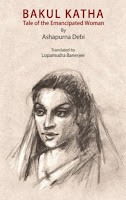
Bakul Katha by Ashapurna Debi. Translated by Lopamudra Banerjee

Bakul Katha by Ashapurna Debi.
Translated by Lopamudra Banerjee
Avenel Press, 2021. Pp 335. ₹ 500/-

Reviewed by Nandini Sahu


The day my dear friend and fellow writer Lopa (Lopamudra Banerjee) messaged me regarding her translation of Ashapurna Debi’s third novel Bakul Katha from the stellar trilogy, I was overwhelmed. It was like a dream-come-true for me, though it may sound as bit of an exaggeration. I read Pratham Pratishuti and Subarnalata from the trilogy during my early youth; the stories of the two emancipated women. The stories conquered my collective imagination of Bengali literature, society and Indian literature at large at that point. This continued for two decades—and Bakul was always at the back of my mind. I was curious to know what happened of Bakul, but I never found an English translation of the book. I moved from place to place, I was exposed to many lands, but could not make Bakul a thing of the past. Ashapurna Debi is such! A powerful a writer she is.
The translation of Bakul Katha is certainly a milestone and a turning point in the literary career of Lopamudra. This is her major contribution to Translation Studies as well as to Comparative Indian Literature. 
The storyline revolves around the life of Bakul, Subarna’s daughter. Let me quote from the novel, “Bakul aka Anamika Debi, the unmarried youngest daughter of the spirited Subarnalata who stays on in this old ancestral home and evolves into a famous author, finds herself in the strange intersection between hard-earned emancipation and the abuse of freedom, the degeneration of values. Torn between the memories of her unrequited love with Nirmal, her neighbour, his untimely death and her highly eventful literary life as Aamika Debi (her pen name), which defines her as a woman of substance, Bakul’s tale is a tale of empowerment of resistance against various power struggles of the society and also of acceptance. Acceptance of unadulterated love that comes from her feisty, rebellious niece Shampa who continues to break her shackles and revolts against the double standards of her familiar world. Acceptance of the unnamed bond of love and camaraderie between herself and Madhuri, her past lover Nirmal’s wife. Acceptance also symbolizes the life of Bakul’s widowed elder sister Parul, a poet at heart, living alone.”
Satyabati was Subarna’s mother; she had the audacity of going against patriarchy in a pre-Independent Bengali joint family. Subarna inherited her mother’s rebellious pedigree and dared to call a spade a spade—but she too couldn’t realize her dream of a liberated, egalitarian society. Bakul, who represents the third generation of these progressive and fiercely independent women, has a life that Satyabati and Subarna would have dreamt of living. She has an enviable academic and professional career as a successful woman writer. But then, is this the kind life that Bakul had asked for? What are her existential issues? What does her inner voice say? What struggles does she have with herself? And what is her idea of ‘acceptance’? What are the post-colonial calligraphies of the character Bakul, painted by Ashapurna Debi? These are some of the issues and introspections that the novel deals with, and the translated version brings to life meticulously. For a non-reader of Bengali, the effective translation does sound like an original work—though Lopamudra has been extremely faithful to the original text.
Translation does not mean the reconstruction of lexicon after lexicon, it basically intends to bring home the culture—hence bestowing the ‘power’ on the translator. It won’t be an embellishment to create a discourse here that Lopamudra has assigned more power for the novel with this translation, taking it to the Western readers as well as non-Bengali Indian readers. The object of this translated text, to me, has been to deal with the issues related to the translation of a seminal, signature, challenging Bengali text with a focus on the following points: 

* Translation as a mode of representing identity
* Solving the problems of a difficult translation: linguistic, cultural, semantics, lexical
* Dealing with the language functions of Bengali and English
* Problematizing translation as loss: cultural essence, sonority, spirit 
* Translation: bringing home the culture 

Lopamudra, the translator, has finely grouped both the texts selectively under broad-spectrum heads including the title, the organization, the paragraphing and sentence connectives, shifts, metaphors, cultural words, proper names, neologisms, so-called untranslatable words, indistinctness, meta-language, puns, sound-effect, alliteration, assonance, onomatopoeia, symbols, allegory—and made an assessment of the whole to accomplish precision. The translator’s preface, which is very important, attempts to consign the translation in a foreign atmosphere, and has interpreted the text linguistically as well as culturally. 

After reading the novel, I also felt good to read the Appendix with the pertinent and germane comments by Professor Sanjukta Dasgupta, Satadeepa Gupta, Dr Anita Nahal and some other admirable scholars. The book has a tone and tenure, it has a character of its own, and it is a comprehensive feminist discourse. The book has the power of creating history. 
***

Bio:
Prof. Nandini Sahu, Professor of English and Former Director, School of Foreign Languages, IGNOU, New Delhi, India, is an established Indian English poet, creative writer and folklorist. She is the author/editor of fifteen books. She is the recipient of the Literary Award/Gold Medal from the hon’ble Vice President of India for her contribution to English Studies. Her areas of research interest cover New Literatures, Critical Theory, Folklore and Culture Studies, Children’s Literature and American Literature.
www.kavinandini.blogspot.in

Essentials of Living: Nandini Sahu (Poetry)

Nandini Sahu
A World Without Walls

Like a pitcher of nectar it contains Truth,
the messages from Gita, Bible and Quran;
the ideals of Ram and Rahim
Christ and Lord Krishna come together--
Embrace all, purify all.
It is a world without walls
where visions of unity, joy, peace
dawn upon us.
Can we dream of this world?

Here spring softens  its colour into breeze,
the happy day shares
children’s laughter in the park,
the birds sing spring songs
knocking the blue bright sky.
It is a dream ecosphere of a certain height
from where everything looks slight.

A house of dreams
its doors, windows, rooms
are eager to be possessed.
Evolution is no time’s achievement.
Man may accomplish it
allocate his head aloft
in a world without walls
and turn round and round
around it.
***


The Iron Gate

The dove of my eyes
seeking to soar in the azure sky
looking for an abode
in the domain of Heavens
knocked
at   the door of time.
The iron gates of the sky
were closed for the dove
to clash with another
whirl into swirls.


Now I comfort the dove
to leave the easy escaper’s way
and stand breast to breast
with the iron gate.
Sleep  
sinking all desires
or go to the sea
where wind rolls to infinity.
Don’t flinch in unfounded fear.
Till life droops towards the sunset
don’t get gagged by tears.

You’re the dove of peace,
flap your wings
high up in the blue
heralding life
over the horizons.
Run through the morbid
wilderness of bliss
till the iron gates of life
shed their skins.
***

Bio: Prof. Nandini Sahu, Professor of English and Former Director, School of Foreign Languages, IGNOU, New Delhi, India, is an established Indian English poet, creative writer and folklorist. She is the author/editor of fifteen books. She is the recipient of the Literary Award/Gold Medal from the hon’ble Vice President of India for her contribution to English Studies. Her areas of research interest cover New Literatures, Critical Theory, Folklore and Culture Studies, Children’s Literature and American Literature. www.kavinandini.blogspot.in

Essentials of Living: Sony Dalia (Poetry)

Sony Dalia

Punch the Pandemic


As long as day was bright, shade was in demand
when shadows invaded, frantic search for light,
can’t man live in peace, sans envy, pride, fright?
Composure ensures safety to ship under command.

Caution good any day
can’t avoid some at times;
tact helps us sometimes
firm, soft words best way.

 Unhindered liberty harms, swarms, swallows
 thoughtless masses gather for eternal sleep;
 paranoid helmsmen sacrifice men like sheep,
 pandemic spares none, drives all to gallows!

 Uncaring folks cause pain
 move on, carry not strain;
 faith heals, cheers, fails none
 keep bonds strong, snap none!
***

 
Sony Dalia is the pseudonym of T.S. Chandra Mouli, an academic, poet, translator and critic, who published four anthologies of poems, Delightful Dawn (2011), Graceful Green (2012), Hopping on Hope (2015) and Sparklers (2021). The poet visited 18 countries across 4 continents to make academic presentations in International Conferences and hopes to visit Africa and North America in a couple of years. Hopping on Hope was launched in University of East Anglia, Norwich, U.K. Sony Dalia, who has been publishing poems in English for the last twenty five years, lives in Hyderabad, India.
***

Essentials of Living: Michael R. Burch (Poetry+Translation)

Michael R. Burch
The Greatest of These ...
 for my mother, Christine Ena Burch
 
The hands that held me tremble.
The arms that lifted
                              fall.
Angelic flesh, now parchment,
is held together with gauze.
 
But her undimmed eyes still embrace me;
there infinity can be found.
I can almost believe such unfathomable love
will still reach me, underground.
***


Elegy for a little girl, lost 
for my mother, Christine Ena Burch, who was always a little giggly girl at heart
 
. . . qui laetificat juventutem meam . . .
She was the joy of my youth,
and now she is gone.
. . . requiescat in pace . . .
May she rest in peace.
. . . amen . . .
Amen.

I was touched by this Latin prayer, which I discovered in a novel I read as a teenager. From what I now understand, “ad deum qui laetificat juventutem meam” means “to the God who gives joy to my youth,” but I am sticking with my original interpretation: a lament for a little girl at her funeral. The phrase can be traced back to Saint Jerome's translation of Psalm 42 in the Latin Vulgate Bible (circa 385 AD). I can’t remember exactly when I read the novel or wrote the poem, but I believe it was around my junior year of high school, age 17 or thereabouts. This was my first translation. I dedicated the poem to my mother after she died with Covid pneumonia just before Christmas.


Final Lullaby
 

for my mother, Christine Ena Burch


Sleep peacefully—for now your suffering’s over.
 
Sleep peacefully—immune to all distress,
like pebbles unaware of raging waves.
 
Sleep peacefully—like fields of fragrant clover
unmoved by any motion of the wind.
 
Sleep peacefully—like clouds untouched by earthquakes.
 
Sleep peacefully—like stars that never blink
and have no thoughts at all, nor need to think.
 
Sleep peacefully—in your eternal vault,
immaculate, past perfect, without fault.
 
Amen


Remembering Not to Call

a villanelle permitting mourning, for my mother, Christine Ena Burch
 
The hardest thing of all,
after telling her everything,
is remembering not to call.
 
Now the phone hanging on the wall
will never announce her ring:
the hardest thing of all
for children, however tall.
 
And the hardest thing this spring
will be remembering not to call
the one who was everything.
 
That the songbirds will nevermore sing
is the hardest thing of all
for those who once listened, in thrall,
and welcomed the message they bring,
since they won’t remember to call.
 
And the hardest thing this fall
will be a number with no one to ring.
 
No, the hardest thing of all
is remembering not to call.


Mother’s Smile

for my mother, Christine Ena Burch

There never was a fonder smile
than mother’s smile, no softer touch
than mother’s touch. So sleep awhile
and know she loves you more than “much.”
 
So more than “much,” much more than “all.”
Though tender words, these do not speak
of love at all, nor how we fall
and mother’s there, nor how we reach
from nightmares in the ticking night
and she is there to hold us tight.
 
There never was a stronger back
than father’s back, that held our weight
and lifted us when we were small
and bore us till we reached the gate,
then held our hands that first bright mile
till we could run, and did, then flew.
But, oh, a mother’s tender smile
will leap and follow after you!


Deliver Us ...
 
for my mother, Christine Ena Burch
 
The night is dark and scary—
under your bed, or upon it.
 
That blazing light might be a star ...
or maybe the Final Comet.
 
But two things are sure: your mother’s love
and your puppy’s kisses, doggonit!


The Poet's Condition
 
for my mother, Christine Ena Burch
 
The poet's condition
(bother tradition)
is whining contrition.
Supposedly sage,
 
his editor knows
his brain's in his toes
though he would suppose
to soon be the rage.
 
His readers are sure
his work's premature
or merely manure,
insipidly trite.
 
His mother alone
will answer the phone
(perhaps with a moan)
to hear him recite.

 
Our English Rose
 
for Christine Ena Burch
 
The rose is—                                 
the ornament of the earth,
the glory of nature,
the archetype of the flowers,
the blush of the meadows,
a lightning flash of beauty.
 
This is my translation of a Sappho epigram.


Arisen
 
for my mother, Christine Ena Burch
 
Mother, I love you!
Mother, delightful,
articulate, insightful!
 
Angels in training,
watching over, would hover,
learning to love
from the Master: a Mother.
 
You learned all there was
for this planet to teach,
then extended your wings
to Love’s ultimate reach ...
 
And now you have soared
beyond eagles and condors
into distant elevations
only Phoenixes can conquer.
 
Amen
 
 
These are poems and translations pertinent to the pandemic …


Styx


Black waters—deep and dark and still.

All men have passed this way, or will.


The Leveler
 
The nature of Nature
is bitter survival
from Winter’s bleak fury
till Spring’s brief revival.
 
The weak implore Fate;
bold men ravish, dishevel her ...
till both are cut down
by mere ticks of the Leveler.


Less Heroic Couplets: Dark Cloud, Silver Lining
from “Love in the Time of the Coronavirus”
 
Every corona has a silver lining:
I’m too far away to hear your whining,
and despite my stormy demeanor,
my hands have never been cleaner!


This World's Joy
anonymous Middle English poem, circa 1300
loose translation/interpretation by Michael R. Burch
 
Winter awakens all my care
as leafless trees grow bare.
For now my sighs are fraught
whenever it enters my thought:
regarding this world's joy,
how everything comes to naught.
 
Wynter wakeneth al my care,
Nou this leves waxeth bare.
Ofte y sike ant mourne sare
When hit cometh in my thoht
Of this worldes joie, hou hit goth al to noht.


“This World’s Joy” or “Wynter wakeneth al my care” is one of the earliest surviving winter poems in English literature and an early rhyming poem as well.  Edward Bliss Reed dated the poem to around 1310, around 30 years before the birth of Geoffrey Chaucer, and said it was thought to have been composed in Leominster, Herefordshire. I elected to translate the first stanza as a poem in its own right.


Ech day me com├лth tydinges thre
(anonymous Middle English lyric, circa the 13th to 14th century AD)
loose translation/interpretation by Michael R. Burch
 
Each day I’m plagued by three doles,
These gargantuan weights on my soul:
First, that I must somehow exit this fen.
Second, because I cannot know when.
And yet it’s the third that torments me so:
Having no way to know where the hell I will go!
 
Ech day me com├лth tydinges thre,
For wel swith├л sore ben he:
The on is that Ich shal henn├л,
That other that Ich not whenn├л,
The thridd├л is my mest├л car├л,
That Ich not whider Ich shal far├л.


Update of "A Litany in Time of Plague"
 
THE PLAGUE has come again
To darken lives of men
and women, girls and boys;
Death proves their bodies toys
Too frail to even cry.
I am sick, I must die.
    Lord, have mercy on us!
 
Fat cats, what use is wealth?
You cannot buy good health!
Physicians cannot heal
Themselves, to Death must kneel.
Nuns’ prayers mount to the sky.
I am sick, I must die.
    Lord, have mercy on us!
 
Beauty’s brightest flower?
Devoured in an hour.
Kings, Queens and Presidents
Are fearful residents
Of manors boarded high.
I am sick, I must die.
    Lord, have mercy on us!
 
We have no means to save
Our children from the grave.
Though cure-alls line our shelves,
We cannot save ourselves.
"Come, come!" the sad bells cry.
I am sick, I must die.
    Lord, have mercy on us!
 
These are poems I call “iffy” haiku because they don’t obey all the rules about haiku.


iffy coronavirus haiku #1

plagued by the Plague
i plague the goldfish
with my verse
 

yet another iffy coronavirus haiku #2

sunflowers
hang their heads
embarrassed by their coronas
 
 
homework: yet another iffy coronavirus haiku #3
 
dim bulb overhead,
my silent companion:
still imitating the noonday sun?
 
 
yet another iffy coronavirus haiku #4
 
spring fling—
children string flowers
into their face masks
 
 
yet another iffy coronavirus haiku #5
 
the Thought counts:
our lips and fingers
insulated by plexiglass ...
 
 
yet another iffy coronavirus haiku #6
 
masks, masks
everywhere
and not a straw to drink ...


These are other haiku I wrote during the pandemic, thinking of my mother’s love and how I was unable to visit her while she was under quarantine, from which she would not emerge alive.


Crushed grapes
surrender such sweetness:
a mother’s compassion.
 
My footprints
so faint in the snow?
Ah yes, you lifted me.
 
An emu feather
still falling?
So quickly you rushed to my rescue.
 
The eagle sees farther
from its greater height—
our ancestors’ wisdom
 
The sun warms
a solitary stone.
Let us abandon no one.


This final poem is for all the mothers who lost children, some of them elderly children, but children nonetheless.

Childless
 
Mightier than Atlas,
she shoulders the weight
of one fallen star.

***


(The poems: Poet’s Condition, Mother’s Smile and Final Lullaby were first published in the February-2021 edition of Borderless journal, Singapore. Editor)

BIO: Michael R. Burch's poems have been published by hundreds of literary journals, taught in high schools and colleges, translated into fourteen languages, incorporated into three plays and two operas, and set to music by seventeen composers.

Essentials of Living: Neelam Saxena Chandra (Poetry)

Neelam Saxena Chandra
WRITING

Writing has a therapeutic charm!

If you are passing through the realms of happiness,
You sprinkle joy as you write,
Making the entire milieu glow.

If you are passing through the pangs of pain,
The process of writing cleanses your heart,
And you smile again!

If you are crossing the zones of nothingness,
So many philosophies of life
Open up in front of your eyes
Like a cherished treasure!

Yes, writing is a stream,
That takes away all the murky ugliness with its flow
And paints your life golden!

Writing is cathartic,
Specially in these pandemic times,
When everyone seems to be losing hope!
It’s like a boat that will steer you 
Through this tempest!
***

Bio:
Neelam Saxena Chandra, has authored 5 novels, 1 novella and 8 short story collections, 35 poetry collections and 14 children’s books. She is a bilingual author, writing in English as well as Hindi. More than 1500 of her poems/stories have been published in various journals/anthologies/magazines. She holds a record with the Limca Book of Records, 2015 for being the Author having the highest number of publications in a year in English and Hindi. She has won several international and national awards. She was listed in Forbes as one of the most popular 78 authors in 2014. When she is not working or writing, she loves a game of Table Tennis, anchoring, acting, walking etc. besides large doses of laughter.

Contents, January 2022


Setu

Volume 6; Issue 8; January 2022


Setu PDF Archives

Editorial

Poetry

Special Section: Essentials of Living: A survival Guide in the Pandemic-Stalked Times

Creative of the Month

Short Fiction

Community: Parsis

Homage: Assassination of Mahatma Gandhi

Book Review

Photo Essay

Setu Initiative: Setu Series of Virtual Readings


The Disappearing Community of India

Parsis

This proud, pioneering, industrious, honest, altruistic and appreciative community has integrated into its adoptive country India and as Indians first have contributed immensely to keep her head high and her flag flying free. The triveni sangam of Humata (Good Thoughts), Hukata (Good Words), Huvarshta (Good Deeds) is the basic tenet of the Parsis who follow the Zoroastrian religion.  Unfortunately now, fewer and fewer people seem to know about this fast vanishing community. Yet those who do know the Parsis, value their friendship for their integrity and fun-loving nature. This is one of the rare Indian communities that can laugh at itself. 

History tells us that fleeing the Arab persecution in Persia in 636–651 CE, Zoroastrians left their homeland for distant lands. One group landed on the shores of Sanjan, which was then the territory of the generous and compassionate King Jadi Rana. They were granted asylum with a few conditions and obligations. One being that they would adopt the language and dress of the region and that they would not seek to convert any one into their religion. Having stayed true to that, Parsis today consider Gujarati as their mother tongue and have adopted the dress code, but have simultaneously developed their own ethnic identity. They are full-fledged Indians in terms of national affiliation, patriotism, language and history, but have maintained certain cultural, behavioural and religious practices of their own.   


Holiest of the Holy

Udvada in Gujarat is a sacred place of pilgrimage for Parsis. The biggest fire-temple known as Iranshah is there. The ‘atash’ or fire that burns there is 1, 299 years old. It was consecrated in Sanjan. Special implements were brought for this purpose to Sanjan from Iran, by road. Sixteen different types of fires form this sacred fire. One of which was obtained from lightning, brought down by powerful rituals and manthric prayers. After the fire of Iranshah was consecrated it moved between 7 different locations from Sanjan, South to the Bahrot Caves, over to the Vansda Forests, then to Navsari, followed by Surat, back to Navsari, south to Valsad and eventually rested in Udvada where it has resided for 276 years and nourished with offerings of sandalwood day in day out. It had to undergo this trial, so it could be preserved intact and kept from being defiled during political instability and other security concerns.


Zoroastrianism

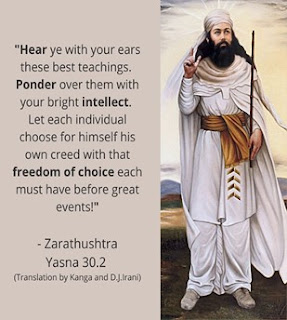
Arguably the world's first monotheistic faith believed to have been founded around 1700 BCE Zoroastrianism is one of the oldest extant religions. Its founder prophet Zoroaster (Zarathushtra), taught that good (Ahura Mazda) and evil (Angreh Mainyu) were opposite forces and the battle between them is more or less evenly matched. A person should always be vigilant to align with forces of light - asha or righteousness and stay away from forces of darkness - druj or wickedness. Both forces reside in man and his choice would eventually determine his own heaven or hell. The Zoroastrian holy book, called the Avesta, was written in the Avestan language, which is closely related to Vedic Sanskrit. The Gathas are 17 hymns traditionally believed to have been composed in Avestan, by Zarathushtra.

What are the main components of the religion as practiced by the Parsi community? Based on scientific reasoning, the adherence to purity and avoidance of pollution of natural elements, play a great role.

The Navjote ceremony is among the most significant moments in the life of a Zoroastrian. Before the age of puberty, a child is invested with the sacred sudreh (muslin vest) and kushti (sacred thread) under the guidance of the priest. These symbols of the faith remain a Parsi’s constant companions. Daily prescribed prayers, worship at Fire Temples, marriages and funerals all have their specific place and rites.


The Community

In 1780, 9.2% of the population of Bombay were Parsis. A first wave of migration followed a famine in Gujarat in 1790. By 1812 the number of Parsis in Bombay had quadrupled. A huge fire in Surat in 1837, saw a second large wave of migrations. Today, the biggest congregation of Parsis is in Mumbai, followed by other cities like Pune, Surat, Amdavad and Navsari.

The Parsis are intimately connected with the history of Mumbai. The cotton boom was largely fuelled by Parsi entrepreneurs. The oldest newspaper in Mumbai, "Bombay Samachar", was run by Parsis. They gave birth to nationalist stalwarts like Dadabhai Naoroji, Pherozeshah Mehta, Sir Dinshaw Vatcha and Madam Bhikhaji Cama. 

One of India's biggest industrial houses was founded by a Parsi, Jamsetji Tata.     Donations to build causeways, roads and buildings by members of the Jeejeebhoy and Readymoney families even determined the physical shape of erstwhile Bombay! I could go on with a list of Parsi firsts which have encrusted many a priceless jewel in Mother India’s crown. From nationalism and patriotism, to academics, sports, industries and institutions, medicine, bureaucracy, printing and publishing, to music, drama and films. 

An interesting titbit. In 1735 Loveji Nusserwanji, a master shipbuilder from Surat, was granted land in Bombay by the East India Company. He took the name of his trade Wadia, and moved into the developing town. Incidentally, the US national anthem "Star Spangled Banner" was composed by Francis Scott Key on board the ship Minden which the Wadias built. The oldest British warship, HMS Trincomalee launched in 1817 (built by the Wadia Group in Bombay), is now a museum ship.  


Parsi cuisine 

It consists predominantly of non-vegetarian fare but vegetables are as important a part of their food. Dhansak is famous around the world as the most popular Parsi dish, yet surprisingly it is a regular tradition to have it on the fourth day of someone’s death.  If there is one thing that Parsi cooking has ‘heroed’, it is the humble, flexible EGG! Parsi egg dishes are in a league all their own.

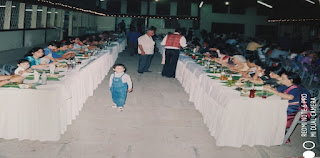
A typical sit down dinner at a Parsi function
One speciality is the “Akuri” - spicy scrambled eggs on hot buttered toast or with chapattis.  The Bharuchi Akuri is richer, with nuts, raisins, butter and cream. The Parsi omelette too is a singular, spicy version with onions, tomatoes, green chillies, ginger-garlic paste, coriander and powdered masalas, all adding their unique flavours. Their experiments have lead to delicious creations such as Eggs on Lady fingers,  Eggs on potato juliennes, on spicy tomatoes,  eggs on wafers  and you could go on with all sorts of “Par eeda” meaning egg on top of almost anything and everything!  Even kanda-keri par eeda – eggs on mangoes cooked with onions. You might not find anything else in a Parsi kitchen, but you will most definitely find eggs and a willing hostess to plate up some exciting dish with them.


Towers of Silence

In 1673, the British handed over a piece of land in Malabar Hill to the Parsi community for the establishment of their first Dakhma, Tower of Silence - the final resting place of a Parsi. 
 
It is a circular, raised structure built by Zoroastrians for excarnation. To prevent the pollution of the sacred elements: Earth, Water, and Fire, the bodies of the dead are placed at the top of open towers   exposing them to the sun and scavenging birds, thus seeking to effectually prevent decay, with all its attendant evils. The bones, falling into a central ossuary pit disintegrate naturally and anything left gets washed off by rainwater into multiple filters of coal and sand.  
 
In philanthropic Parsi Zoroastrian tradition, this funerary practice is also considered to be an individual's final act of charity, providing the birds with what would otherwise be destroyed.  Unfortunately, the vulture population on the Indian subcontinent has shrunk, chiefly due to diclofenac poisoning of the birds after the drug was introduced for livestock in the 1990s. The few surviving birds are often unable to fully consume the bodies.   Parsi communities in India had evaluated captive breeding of vultures and the use of "solar concentrators"   to accelerate decomposition.  Many now voluntarily opt for burial or cremation, but no other method has proved as fully effective as the original.


Declining Population

So why has this blooming, tiniest of India’s religious minorities, stopped booming? 

*The population of Parsis-Zoroastrians, a notified minority community under the National Commission of Minorities Act 1992 has been a cause of concern for the Ministry of minority affairs. In 1941, the community that stood at 1,14,000 went drastically down to 57, 264 as per Census data of 2011. The community has an aging demographic profile with a large number of middle-aged and elderly populations. While migration to other countries can be assumed as one of the reasons for lower population figures in India, late marriages, voluntary and involuntary childlessness are factors cited by the Jiyo Parsi scheme for the low fertility rates among the Parsi community. There is also a significantly higher percentage of unmarried Parsi males as compared to non-Parsis who are unmarried.

In 2013-2014, the ministry inaugurated the Jiyo Parsi scheme, a Government of India-supported scheme to arrest the decline in population. And since then it has been making advocacy and campaigning efforts to encourage Parsi couples to marry timely, influence their mindset to have their first or next child, tackle the stigma associated with IVF/ART therapy, introduce them to benefits of medical reimbursement, detect fertility problems, make them realize the significance of concepts like work-life balance.

#The Jiyo Parsi Scheme was thus formulated and inaugurated as The Central Sector Scheme for Containing Population Decline of Parsis in India under MOMA on 24th September 2013. There were two major components, Medical Support for infertility treatment, Advocacy and Outreach Programmes. The Scheme is unique not only to India but also worldwide. It is the first time ever that an intervention on a national scale has been attempted in any country to reverse the demographic decline of a whole community. 

Only time, concerted efforts and determination will tell over a decade what results this initiative will have led to.


* https://www.ibtimes.co.in/diminishing-parsi-community-finds-beacon-hope-new-births-despite-losing-178-covid-details-837599
Zarathushtra Image: Prophet Zarathushtra @world _zoroastrian_organization     
***


Bio:
To Shernaz Wadia, reading and writing, means an inward journey. Her work has been published in various anthologies and e-journals. She sometimes dabbles in short Japanese forms of poetry too.


Essentials of Living: Shernaz Wadia (Prose)

Radiating Rainbows


Covid has gripped mankind by its emotional throat and has it dangling from the fragile thread of panic. A microscopic entity that decided to go globe-trotting, is mowing down people, disregarding frontiers and boundaries. This invisible virus has changed destinies and world dynamics.  

A seemingly unvanquished force has chiselled a vague reality out of the bedrock of terror. A gauntlet has been hurled at us, churning a different kind of war. There are waves of this virus still coming at us. Let us prevail over it. We must not wrestle with the raw brutality of living nor give in to fatalistic ‘end-of-the-world’ mindsets. Rather than moping and worrying, let us walk out of this storm as changed persons. It is essential that we garner the wisdom of past man-made and natural calamities and reinstate balance for all living and non-living entities; for the continued existence of our patient, ever-giving and forgiving mother earth. 

Stunned humanity, united under the same awning of apprehension and hope is still looking for succour. Loneliness grapples with itself on social media. I sense sleepless eyes flecked with concern, stress and terror; hands keep reaching out for warmth and hugs. Let us embrace them, not with words which rarely hold the weight of their meaning but with the silence of alert perception, emitting vibes of love, light, hope and peace across digital bridges of empathy. We need to lift the covering off blocked personal stands, restore numbed emotions and raise others out of the yawning abyss of depression. In this short, doubtful span, we must leave behind grudges and make love our permanent ally.

Shining through these abruptly changed times there is illumination...disguised opportunities tango before mankind offering measures to develop in diverse ways that will contribute to the well-being of others and self. If we look beyond the shadow of qualms we will find the light that will channel us to share our hearts and create a platform of staying power for others. The very pandemic that threatened to wipe out the world, has united us through pain and dread; if forces of evil were let loose, a host of angels goes about redeeming the human race. It has brought out the best and the worst in people. If there are those who out of alarm and unawareness behave thoughtlessly, we also have amongst us angels who are the embodiment of courage and altruism. From them we learn that one way to endure these trying times is to lose ourselves in selflessness, in being useful and helpful to those in dire physical and emotional need.

Glued to screens big and small, we have witnessed the spectrum of human behaviour and if there is one message that must be gleaned, it is that we need one another. Despite our disparate ideologies and biases, our polarised world limped to a kind of wholeness because of this pandemic. Through reflection imposed upon us by isolation, with a set purpose and concerned hearts, our fractured world began to heal.  But it still needs a lot of therapy. There are lesions that need to be fixed with the salve of tenderness; we need to link hands in true togetherness to lift up hearts; raise dejected minds out of dull acquiescence. We must maintain human values at the core of all engagement; keep ego at bay and pour some blessings in kind and otherwise into less fortunate lives, lightening their bug-ridden skies.  Let us gravitate from the tremors of fear towards the unshakable rock of faith. 

As many did during the calm of enforced segregation, we must continue to stay united with our inner self; reprogramme internal clocks and contemplate the true essence of life — oneness. There is fullness, richness and glory in the unity of mankind – let us exult in it. Can we unselfishly spread affection and radiance into this world and with largesse forgive those who choose self over others because ignorance blindfolds them?  Fright fed by faulty narratives transcends all other emotions and impairs free thinking. It is a self-preserving tactic some indulge in, not realising that in truth it is dysfunctional and harmful. It cannot be said too often: the need of these times is to send out shimmering rainbows — vibrant with Values that hold true, Inclusiveness, Blessings, Gratitude, Yes-we can attitude, Optimism and Reassurance — springing from an inner consciousness, so that the ones who have taken this ensuing culture of anxiety to a warped extreme may dare to fully inhabit and brighten their interior life.

Linear time has become hazy — we seemingly exist in non-time; the hourglass lies horizontal, the sand stock-still. When well chalked-out futures have been reduced to a blur and a fluid timelessness grips this chaotic period, we have only the present to lose. Let’s not give it up. Love it, live it! In acceptance for this new way of life is the strength to carry on... to be grateful for each new day’s blessings.     
***


Bio:
To Shernaz Wadia, reading and writing, means an inward journey. Her work has been published in various anthologies and e-journals. She sometimes dabbles in short Japanese forms of poetry too.