Showing posts with label 202304E. Show all posts
Showing posts with label 202304E. Show all posts


Runaway Journey
 |
| Medha Bhatt |
That day she boarded the train to go to her uncle’s house in Patna. She was looking forward to meeting her uncle. He was a gentle man and always seemed to calm her inner turmoil. She saw or rather felt that most of her co-passengers had already seen her scar. There was a time when she used to ask her friends what they saw when they met her first, they always told her they saw her good qualities, but nobody sees qualities when they meet first. All they see is the physical appearance. She had stopped asking now, it didn’t matter.
Trains always managed to elicit a strange kind of calmness in her. She didn’t know why. Trains were inherently a chaotic place. There was always a crowd of people trying to go somewhere. And with them came the excitement of the journey they carried. It was the feeling of both belonging to someplace and not belonging to it.
She went and sat at her seat. She had settled down and put on her earphones before she noticed the small girl sitting opposite to her. She was maybe 7-8 years old and was staring at her curiously. She gave her a smile, which made the girl squirm and try to hide. But surprisingly she seemed to be alone. Sandhya tried to look at her co-passengers and see who she might be with. But the child was attached to no one and seemed to be all alone.
“Hi”, Sandhya ventured slowly taking out her earphones.
The child looked away immediately and refused to acknowledge her greeting.
Sandhya decided to give her a little space. Sandhya was a schoolteacher and handling kids was part of her job. And this one, she could sense would need some help. She was also hopeful the parents or a guardian who might have got down at the station might turn up.
When the train started from the station, she realized she had a situation at hand. The girl was alone and from the looks of it, scared. Whenever she caught the girl’s eye, she gave her a reassuring smile.
A smile, in her experience, bridged many valleys.
After a long time, the girl gave her a hesitant smile. Sandhya beckoned her. The girl got up and came and sat with her.
“What’s your name?” Sandhya asked her conspiratorially.
“Gudiya” the girl whispered back.
Sandhya grinned at her and took out her phone. She opened the last group photo of her class and pinpointed a girl with a red bow and a confident smile to Gudiya. “Her name is Gudiya too.”
She could immediately sense Gudiya’s excitement. Everyone loved to see somebody who had their name. Adults at least would hide this curiosity, but Gudiya was too young to understand this. She started studying her namesake closely, though she was careful not to touch Sandhya’s phone.
After observing the other “Gudiya” for a good 5 minutes, the “train” Gudiya seemed to lose interest.
“What’s your name?” Gudiya asked.
“Sandhya.”
“What do you do?”
“I am a teacher.”
The answer gave Gudiya a pause. Maybe she was thinking of her own schoolteacher, thought Sandhya.
“Do you teach English?”
“No. Maths.”
This elicited a frown. Sandhya smiled and thought, another Maths hater.
“What is that mark on your face?” Gudiya asked innocently.
The question was not unexpected. She got it within 5 minutes of meeting someone new. Her usual response was childhood accident. And her tone made it clear she would not give any more details. But this time she thought of a different approach.
“It is a scary story. Are you sure you want to know?” She asked in a mock scary voice.
Gudiya gave an enthusiastic nod. And settled down more comfortably in the seat.
Sandhya started her story, “When I was your age, we had a big Mela in the neighbouring village. I absolutely had to go. Every year we went to that Mela and it was big and had these big rides and so many toys.
All of my friends were going. We had made plans to first have an ice cream and then go on the biggest ride in the Mela.
But that year my parents were very busy. My papa was coming home late with office work and my mama was busy taking care of my younger brother who was not keeping well. So, I was told that we were not going. And we would definitely go next year.
What did I do? Did I behave like a good girl and listen to my parents?”
As Gudiya looked at her, Sandhya shook her head in a No.
“When I told my friends the next day that I was not going because my parents were busy, I cried. This made my friends sad. And one of them got the idea that why can’t I come by myself. My best friend stayed barely ten houses away, she was going to go with her parents.
We made plans. I was to go to my friend’s house and from there I would travel with her family. It seemed easy and we all were happy that a solution had been found.
On the fateful day, I dressed up and lied to my parents that I will be going to my friend’s house to play. I took my purse which had little money and went. Busy that my mom was, she did not notice my taking money to my friends’ house. As soon as I had walked a little distance, I saw our neighbours’ dog right on my path.
Now Gudiya, that dog did not like me. Why? I don’t know. It growled every time I came near, and this usually ended up in me running fast in the opposite direction. This time I had to cross it; otherwise, how would I reach my friends’ house?
So, I thought I just have to do it, the only way out would be to run towards it and hope it didn’t hurt me.
I took a deep breath, held my purse in my hand a little more tightly, and ran. As soon as I crossed the dog, I turned to see if it was chasing me. It was not. But because of me running fast and looking behind I didn’t notice one of our neighbours coming in his scooter. I crashed hard into him.”
Sandhya paused to catch her breath and for some dramatic effect and was happy to note Gudiya was waiting in anticipation.
“When I woke up, I was in the hospital with this huge mark on my chin. My mom dad scolded me badly. But the mark never left me.
It is why after that I never did anything without making sure it was correct. Nothing that I would need to hide from others.”
She smiled at Gudiya sadly. Gudiya was now looking at her thoughtfully. Questions were forming in her head about the story. She waited for the questions. Kids are always perceptive. They can think and deduce very correctly all situations. Sometimes adults would try to rush them since we are always in a hurry. But she knew if the questions came from Gudiya and the understanding came to her, she would never forget this lesson.
Gudiya was now fiddling with a small rope tied on her hand. Slowly she asked Sandhya, “Do you think you should not have tried to go to the Mela that day?”
“No. I shouldn’t have. But I really wanted to go, and when you are a kid, you sometimes think you know better, but you don’t. I could have explained to my parents that I can go with my friend. That might have prevented the accident.”
“What I did wrong”, explained Sandhya, “was lying to my parents. If I would have told them calmly that I can go with my friends, they would have agreed. But what I thought was they just didn’t want me to go. That was not true. They did not have time to take me. That’s all.”
Gudiya sat quietly after that for a long time. Two stations went by. A few more passengers came and sat in the opposite berth.
Just when they were about to reach another station, Gudiya tugged on Sandhya’s hand.
“I made the same mistake that you did.” She told Sandhya softly.
“I ran away from home. I wanted to go see a movie but my parents did not agree. They said I could not watch it because it was not for kids, but all my friends have watched it. And I got mad. So, I thought I will go to Patna and watch the movie.”
“But now I am feeling scared.” Gudiya finished in a small voice.
“Do you want to go home now?” Sandhya asked.
Gudiya nodded in the affirmative.
They got down at the next station and Sandhya bought a bus ticket to Gudiya’s village. The ride was not long, but it was quiet. Gudiya sat looking out of the bus window and only looked at Sandhya’s scar once. Sandhya sat thinking about that faraway day when not going to a mela seemed like the end of the world.
Gudiya fidgeted more and more as they neared her village. No wonder worried about the punishment she would receive from her parents. The punishment, Sandhya thought, would be nothing as compared to the relief they would all feel when she was back home.
Sandhya gave Gudiya a reassuring smile. As Sandhya smiled, the scar across her chin widened. The scar that had first intimidated Gudiya reassured her that everything would be alright.
***
Bio: Medha Bhatt is a Goan, Maharashtrian, Karnatakan, and Telangana writer. She was born in Karnataka, raised in Goa, and stayed in Maharashtra for a substantial amount of time. Her ‘karmabhumi’ is Hyderabad (Telangana).
She completed her B.E in Electrical from the Goa Engineering College and worked extensively in the technical field and then she did a logical switch to Technical writing and is currently working in an MNC in Hyderabad.
Her hobbies include reading, writing, collecting quotes, painting, learning a new language, and music. She has been published in Navhind Times (Goan newspaper), Women’s Era, and the Caravan.
She currently stays in Hyderabad with her husband and her son.
Fiction: Airavata (Padmanabh Trivedi)
 |
| Padmanabh Trivedi |
I was young, perhaps
too young to understand death. The phenomenon had never touched me with gravity.
Back in my village people used to die who I had nothing to do with except when
they died, and that too, only because I found it funny to see the crying faces
of the adults who I had rarely seen crying.
Well, one day I
grew up to realize the meaning of death.
I was very fond of
my grandmother-dadi. She was my favorite person because she never got
angry with me, always gave me a rupee or two for the ice-cream cakes the
vendors sold in the village and, moreover, she had exclusive stories to tell.
We would share the
same cot on the roof in summer nights. I still remember her smell. She had
hollowed-out cheeks, wrinkled skin and slightly leaned body because of her age.
I had hundreds of curiosities and at night the clear sky was one of them. I’d
gaze the sky and ask about stars which, as she explained, were our ancestors
after passing away. And in clearer sky, the serpentine cloud-like haze
engulfing stars was my utmost curiosity.
Once I asked her,
“What’s that, dadi?”
“That’s the path
of Airavata.” she told convincing.
“What’s Airavata?”
I added.
“It’s the elephant
which Lord Indra rides.” she said with patience.
I kept silent for
a few moments calculating the possibility of Airavata walking on the
translucent streak of cloud and asked, “Dadi, what if it falls upon us?”
on which she laughed and said “No, it won’t. It has divine power.” ‘Divine
power’ was enough to put me at ease.
Sharing cot with
her was a good feeling. I felt protected. But at the same time I’d imagine when
she’d die, this cot will be all mine. It was a thrilling imagination to me.
Later on, I often
saw her crying alone. When I asked my mother why she cried alone she’d say with
a deep sigh, “Mausi’s -her sister- death has caused her this pain.”
Her sister used to
stay with us after her husband abandoned her and married someone else. Recently
she had died of heart-attack when I was at my aunt’s home for summer vacations.
I thought I had missed the excitement of her demise.
After that, dadi
looked sadder and thinner. Her complexion started getting pale. One day, she
fell very ill. Papa took her to hospital. After three days he brought her home.
He was very serious and after some time everyone was as much serious. They
talked in hushed voices when dadi was lying on the same cot.
I mustered up
courage to quench my curiosity with mother about what’s going on.
She cried hugging
me, “Dadi, is with us only for three more months. Serve her well, beta.”
I couldn’t
understand but later on from a neighbour I got to know she’d been diagnosed
with the third stage of pancreatic cancer. It was serious and exciting too for
me and the word ‘cancer’ sounded fascinating. For the first time, someone close
to me would die and I’d see everything.
I started
observing and serving her the best I could. One day, I asked her “dadi,
will you give me one hundred rupees note when baba- my grandpa- brings
his pension this time?”
She replied with a
strange tinge of love and pain on her face, “Yes, I will.” She hugged me. I
think tears had welled in her eyes.
This was a huge
promise to me. I’d never ever owned one hundred rupees note in my life so far.
I’d started dreaming how I’d utilize it. I’d buy a purse and keep it in that or
I’ll buy the most expensive toy with that and so on and so forth.
One day I was
playing marbles with my neighbour fellows suddenly their parents called them telling,
“Look after the home, we’re going. Dadi is about to die.”
It was a thrill
and shock to me. I also rushed along with them. Surrounded by my family, dadi
was vomiting blood. She was brought to her death bed on the ground. She was in
her senses. She held my hand and kept gazing at me for a while with tears in
her eyes and I was looking at her and worrying about my hundred rupees note.
This promise was not made before anyone. Why would anyone give me so much money
then? I wished she could survive to give me money, and then she could die.
Well, the destiny
had its own way. Suddenly, her eyes left open, her movements stopped. All
snapped bewailing in chorus. I was sad for the loss of my promised money.
People were noticing me not crying. I wished I could cry. But how could I cry
without tears. I’d look funny. So I kept silence and tried to stay unnoticed
while observing everything. But unlike before, I did not feel laughing
observing everyone’s contorted faces.
I observed the
entire funeral rites. After her cremation, the relatives left and the evening
came. I claimed my heirness to the cot and, against my anticipation, nobody
objected.
I lied alone on
the cot, stretched my limbs across with the pomp of authority. It was a summer
night and the sky was clear dark with twinkling stars. I saw that serpentine
cloud again. I wondered again but dadi was not around to say anything
to. With a start, gloom came over me. I shrank my limbs slowly, changed side.
But she was not there to put my hand on or lie hugging. I wondered she will
never ever come back. I felt my eyes watering. The cot was too much for me now.
I got up and went to my mother’s cot. I hugged her tightly for solace. I had no
word for what I was feeling. Now I can say I was missing her. After some time,
I faced upward again and asked mother, “Amma, which star is dadi?” and
Amma started crying. And I got silent. I felt like dadi is lying in her
cot but the cot was empty. I never ever lied on that again. I felt relieved
when my brother took that over.
Since that night, whenever I see the clear sky in summer night against all scientific truths, Airavata walks on that serpentine cloud and she’s a bright star for me at least, for a moment at least.
***
Bio: Padmnabh Trivedi is a lecturer in a Government Polytechnic, UP and a research scholar in IIT Roorkee, India. He writes both in English and Hindi languags. You can follow him on Twitter and Instagram @tpadmanabh
Gunnar Wennerberg: Translations by Jerome Berglund


Gunnar Wennerberg was an acclaimed Swedish poet, composer of music, educator and statesman who lived from 1817 to 1901. A statue of him was presented to the city of Minneapolis in 1915 by an association dedicated to preserving the memory of his accomplishments.
Jerome Berglund, recently nominated for the Touchstone awards and Pushcart Prize, has published translations in Setu Bilingual Journal, the Pinecone Review, Brown Bag Online, and Ekphrastic Review. The first full-length collection of his own poetry Bathtub Poems was just released by Setu Press.

War and Peace.
Gunnar Wennerberg
translated by Jerome Berglund
Not only those who be victors of war
Deserve their reputations proudly scored
And venerated in posterity;
Mediators too produce stunning triumphs
Whose splendors we should place just as high up
Are worth celebrating merrily.
You’ve had enough glory of war,
Than you could bear in fact much more,
Noble Swedish people!
Start now and do not cease,
To always exalt peace,
Make your hearts its steeple!
It’s one thing, however, to hear some advice,
Another applying in ways which suffice;
Listening does not mean understanding.
Not long silent remained the corps:
“If you want peace, then ride to war!”
Do it, urgency is demanding!

Spring is in the Air: Sangeeta Sharma
 |
| Sangeeta Sharma |
As Ogden Nash
says,
“Praise the
spells and bless the charms,
I found April in
my arms.”
I agree as I find this April morn
Sunny and cloudy - magically
Spring in all its glory…
Rambling through a Canadian trail in the
stunning sunset hours, a rendezvous
With Nature’s bounty!
A dappled sky and the touch on the visage
of the clean breeze crispy
Chirks up the body.
A gentle, recently-thawed lake’s
undulating water on one side meandering
With long dry autumnal shrubs to enflamed
hue changing
Graceful pair of geese with long upright
necks the waters from the watery edges overseeing
Their high-pitched squeaks of the geese
with the brood in a V-shape returning
The snow-covered patch - jade till
yesterday,
Has now livened up with attractive pink
dandelions striking
An American Robin like a mendicant in
meditation perched atop a leafless tree
Singing mellifluously
Soars your spirit as if in a Paradise.
To conclude with the great English bard,
William Shakespeare:
“When proud-pied April, dressed in all
its trim
Hath put a spirit of youth in
everything.”
Photo Essay: Srishti Sharma
 |
| Srishti Sharma |
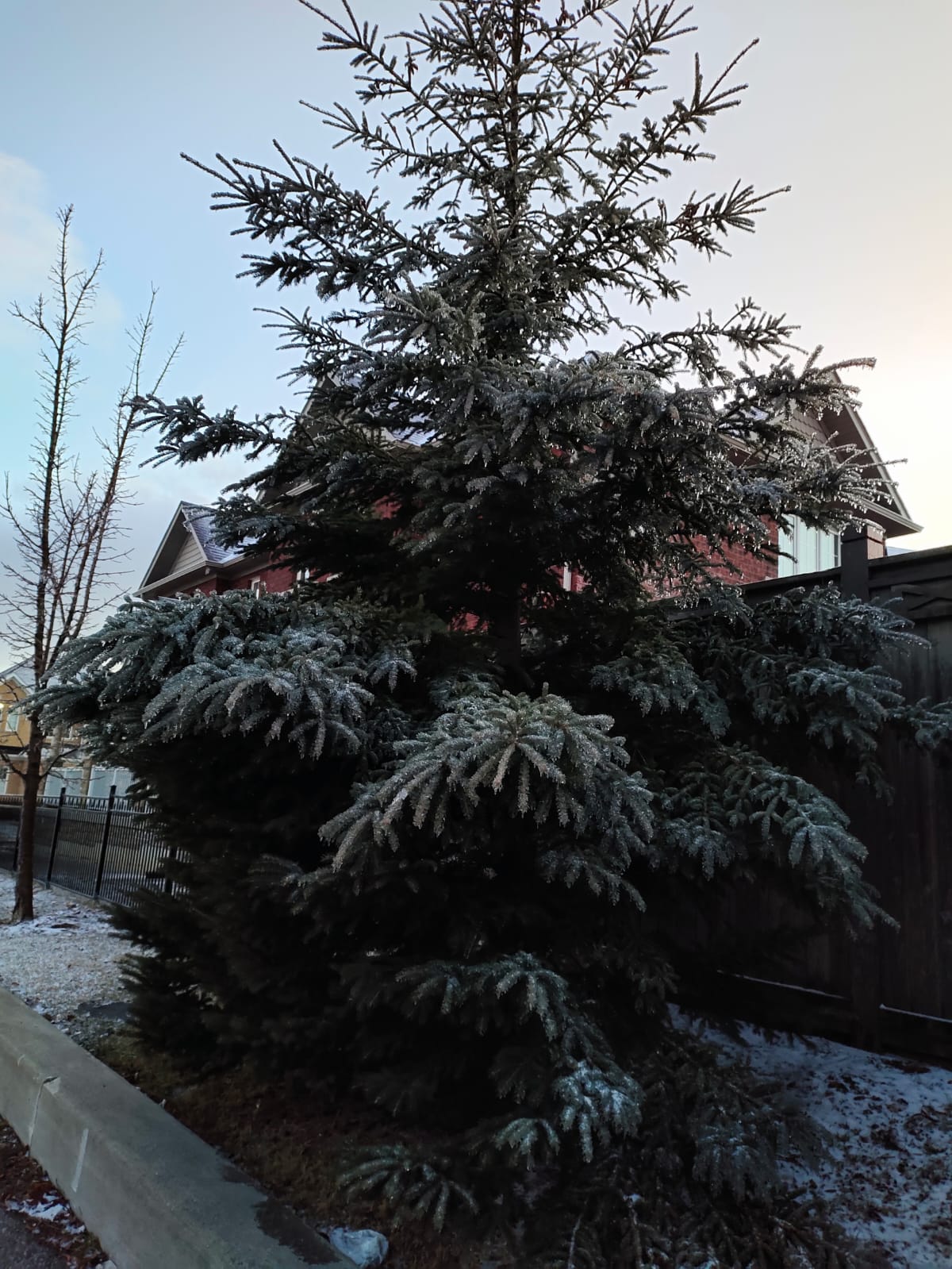
Toronto is captured in changing timelines and varied moods through these visual vignettes; snap shots---artifacts that speak to a heart and mind.
Work of lens catching the transience of the moment!
A city and its suburbs; a famous mountain resort; the Great Lake, its restiveness and raw hypontism; muttering streets and trees that stand witness to the passage of time, slo motion or fast.
The interaction of light and shadow, creating intricate designs and captivating patterns---a show hardly missed.
The rugged charm of the trees and their transformations in the entire year; appeal of the public parks, as community spaces and landscaped retreats.
The energies of Toronto, fuelled by human dreams and desires.
The ethereal beauty of nature.
Of a mega city.
The inherent poetry of the urban spaces, documented.


Poetry: Sanjeev Sethi
 |
| Sanjeev Sethi |
Sanjeev Sethi has authored seven books of poetry. His latest is Wrappings in Bespoke (The Hedgehog Poetry Press, UK, August 2022). He has been published in over thirty countries. His poems have found a home in more than 400 journals, anthologies, and online literary venues. He is the recipient of the Ethos Literary Award 2022. He is the joint winner of the Full Fat Collection Competition-Deux, organized by The Hedgehog Poetry Press, UK. He edited Dreich Planet #1, an anthology of Indian poets for Hybriddreich, Scotland, in December 2022. He lives in Mumbai, India.
Twitter @sanjeevpoems3 || Instagram sanjeevsethipoems
Dawning
When words sail
from known and unknown shores
to land on the shingle
where the page or screen
greets them with gratitude
to form sentences that ignite us.
Slowly these glide into stanzas
which surge with intent to carry
forward the upturns of thought
which began with a prompt
to actualize the architecture
of ideas and emotions to fruition.
Poetry: Jaydeep Sarangi
 |
| Jaydeep Sarangi |
1. Soul Spaces
Over my piercing eyes silence
is called for, again and again
Talking to you is my act of silence
dancing near the old river connect at Jhargram
I celebrate my daughter's feats everyday
taking a special biryani for home
As the summer rain sails over me
my desire makes me of its own
The silent waters of the Ganges
carrying the light of my silent eyes
Delayed is my mind’s full moon,
someone calls me to meet in deep dark
Darkness has a voice, mysterious caller tones
You call; my desire has an evening, our moods mate
A long day signs off waiting for your
mood to return and celebrate the best in the world
Unbound from cultural images, meetings
her free spirit with a trident and a sword
Bright blue, standing on Shiva she
keeps time, the dark mother of the land
As she moves in deep water of life
my heart is taken on loan, undefined.
***
2. The Random Moments
(For Jayanta Mahapatra)
My poems stand in front of your floral gate
Interfaced with green hopes, crow noises
before the wearying banks of the Mahanadi
I leave my rivulets, metaphors behind
passing through a rain of rites of the moment
with a slow soundless night at Cuttack.
The Hirakund Dam is never dry of hope
the substance stirs my grandfather’s heart
hanging over an ancient city of temples and kings.
As an obscure man I ask for more words
out of hunger or a summer smiting times
looking out for some drops of holy rain water
My brown flesh is a missing person
with bare face relationships
lying down with wounds leaking blood
Tonight, I 'm beside the chariot and a lion sitting,
counting shadow spaces at Chandrabhaga beach
without talking to it, my random descent begins.
Life signs are white bones of the past.
If I suddenly lose all doors of paper
how can I talk to a God?
***
Poetry: Kushal Poddar

On the wall of April
some town-poet has instilled
the equation of Hope:
Expectations > Arrivals, Happenstance < Scope.
I look for that young man
with his tote full of spray cans
and an easy explanation
for the existence, universe of verses
and what about April converses.
These days my thirst shifts
from coffee to tea.
I place my cup on the window sill,
gaze at the street parallel
to the garden yet to fulfill its potential.
Time bicycles on the setu nearby.
The bridge runs warm, water still bleak.
Poetry is a notebook found
in the trunk of heart;
with every word my beats pound.
*Setu means bridge
***
Bio: Kushal Poddar, the author of 'Postmarked Quarantine' has eight books to his credit. He is a journalist, father, and the editor of 'Words Surfacing’. His works have been translated into twelve languages.
Twitter- https://twitter.com/Kushalpoe
This Day: Gayatri Majumdar
 |
| Gayatri Majumdar |
The day is becoming
A poem – a little light
unfettered behind the shadowless sun.
The little light dances, at other moments
a steady ballerina pirouetting a storm –
carrying within its slow death,
a thousand petals, many hues,
little red books, Darwin’s theory
and heady fragrances of spices
in a bazaar somewhere in Ernakulam.
The day tosses, turns
unable to shake off fables
of little or no consequence –
Aladdin’s lamp, beauties, beasts and such.
Words become the day
working their cleverness
around twisted empty hallways, sepia photos
hanging by a string –
to make nothing of it,
half-truths and silver sleep.
The day finally enters into
a pact with a poem:
falls in love, unable to recall the vows
of forevers and undone laundry.
The day MUST die
for coded in its birthing
are cries and thunders – remembered rain
wafting the Kadamba breeze
mixing up the saddest of those
purples, fuchsias and creams.
***
Dakshineswar – Chasing the Light
He sat there all
lit up . . .
looking steadfastly at Himself;
He knew we would arrive. Late, but
He waited, of course, because He always does.
At the hour of the
last mini bus
as it leaves for Dharamtala,
when lamps canopy mellowing the frantic
highs for this holy Hoogly, fervent prostrations,
other worldliness, hing kochoris;
the love heavy with
malai-milk-infused cha in khullars
with not one Ola in sight,
he abruptly says,
a tad irritated,
‘chairgulo khali korun*’!
We obey like we would a schoolmaster,
vacating the long rickety longish ancient bench
quickly hoping in our hearts to stay.
In a hurry
not to have us leave this easy, Kali shuts
the hundred-year-old door
with chipping white-painted lotuses
ornamenting the eye – incense,
cobwebs, dust, flame-tongues hang
about a dim-lit entrance –
‘daran, aadh ghonta lagbe^’
(This time, you can gauge the guard’s resolve!)
Not a soul budges; where could we go?
What lay beyond this dream of various shades of gold?
Which consecrated water will we dip our toes into?
So, She will make
us wait humming drumming
shiny steel railings, braiding little girls hair.
The drunkenness
evident:
traversing centuries, leaving lovers,
is this what we bargained for? What we get
crossing rivers, skywalks and bridges
chasing the light across forests, stars?
No japa,
not even piety,
giddy robustious dance this?
*Vacate the
chairs!
^Wait, will take half an hour more!
Poetry because
everything else seems to have evidently failed! – Gayatri
Bio: Writer, editor, publisher Gayatri Majumdar is founder-editor of Brown Critique, the critically acclaimed literary journal and has authored six books including three volumes of poetry. She curates the annual Pondicherry/Auroville Poetry Festival and is associated with Sri Aurobindo Society, Pondicherry.
Poetry: Robert Maddox-Harle
 |
| Robert Maddox-Harle |
Chance Encounter with a Poet’s Psyche
April returns in its cyclic journey
poets become nervous and agitated
contemplating the cruellest month,
the words attack us from beyond
is there solace in their cadence and flow?
is there any salvation in the metrical incantations?
Can chance allow us to write the unconscious?
dark forbidding alleys with dead-ends
dilapidated doorways signal caution
like received truths and bourgeois presumptions
inappropriate doctrinal rules and suppositions,
their fleeting shadows frustrate our creations.
The momentary awareness of the danger of words
stabs the amoral primal unconscious,
chance associations are unique creations,
dancing with energy as they hit the page
each ignore the database of preconceived ideas
generating poignant moments through their own volition
then dragging them into the psychoanalytical morass.
Hyperlinks characterise the unconscious writ large
and answer the mythical allusions of poetry,
creating verdant emotional tensions
drifting into the high end of synapse syncopation,
the momentary awareness of dangerous desire
dissolves previous mysterious states of time
opening a violet spectrum of possibilities.
April
 |
| Arthur Broomfield |
Paint smeared April parades
lilies, that brandish the blood
of the quick, pink viburnum;
magnolias, sepals stained, in retreat,
too late to flee the crematorium.
The yellow daffodil, standing
tall above the March grass,
sees through the bare hedge,
withers in haste.
This is the month
when the paedophile prowls
the school playground,
bags of bullseyes
bulging in his pockets.
The Count shuffles
to the mouth of his cave,
sniffs the morning air,
doubts himself, eavesdrops
on the evensong.
Recoils to ponder
the promised land.
Bereaved words, discarded metaphors
 |
| Chaitali Sengupta |
Sometimes, a few drops of ink,
create words,
falling in a soothing rhythm,
the ups and the downs,
in a beautiful dance,
of resisting and giving in,
of grasping and releasing,
of dissolving and merging,
of holding each thought
like the newborn drop of rain.
And, sometimes,
the thoughts are like open wounds,
no, they have no words.
Only letters, on their way to self-destruction...
Just like a heap of promises, never kept.
I slay those, my eyes glittering with contempt.
They witness moments, I’d rather not talk about!
The bereaved words, discarded metaphors,
curve around my throat.
I do have a muted longing for them,
But for now, I swallow them down,
and tell my microscopic mind,
I’ll grab them some other day,
when I want to raise a storm in a teacup.
Today, I allow only words...
those politically correct words.
***
Bountiful April: Bashabi Fraser, CBE
 |
| Bashabi Fraser |
With two conflicting
declarations of what you stand for -
‘The cruellest month’[1] and a month of ‘shoures soote’[2]
I come to you April – not forgetting an assassination
Of an epoch-changing good man, or the call for a
Pilgrimage as green shoots bring new hope and fervour
To the devotees of poetry, but bolstered by our own
Manifesto which bridges continents as it recalls
The birth of the bard on the banks of the Avon,
While celebrating the new beginning in Bengal -
As Baisakh[3] is ushered in with Rabindranath’s songs
And rhythms and rituals sanctify the New Year
From the Punjab to Assam, from Kashmir to Kerala.
‘The cruellest month’[1] and a month of ‘shoures soote’[2]
I come to you April – not forgetting an assassination
Of an epoch-changing good man, or the call for a
Pilgrimage as green shoots bring new hope and fervour
To the devotees of poetry, but bolstered by our own
Manifesto which bridges continents as it recalls
The birth of the bard on the banks of the Avon,
While celebrating the new beginning in Bengal -
As Baisakh[3] is ushered in with Rabindranath’s songs
And rhythms and rituals sanctify the New Year
From the Punjab to Assam, from Kashmir to Kerala.
April is the month when our gaze
lifts upwards,
Scanning the horizon for lonely clouds to drift
Across the firmament to coalesce as a colony
Bringing - not April showers - but wild Nor’westers
With the thunder of the gods and the flaming crackle
Of blinding light, breaking the silent darkness with
The drenching promise of renewal and plenty.
So after the chatak[4] has waited with open beak
Through the drought of Chaitra[5], praying for
Reviving rain, it is bountiful April that opens
The floodgates of hope and continuity for poets
To sing rivers to new life and tripping vitality.
Scanning the horizon for lonely clouds to drift
Across the firmament to coalesce as a colony
Bringing - not April showers - but wild Nor’westers
With the thunder of the gods and the flaming crackle
Of blinding light, breaking the silent darkness with
The drenching promise of renewal and plenty.
So after the chatak[4] has waited with open beak
Through the drought of Chaitra[5], praying for
Reviving rain, it is bountiful April that opens
The floodgates of hope and continuity for poets
To sing rivers to new life and tripping vitality.
[1] T.S. Eliot describes April as the cruellest month in The Waste
Land. He wrote it when the Spanish
Flu pandemic ravaged the world. Walt Whitman commemorates the death of Abraham
Lincoln in April in ‘The Death of Lincoln’.
Poetry: Ryan Quinn Flanagan
 |
| Ryan Quinn Flanagan |
Freckles Returned to Ecstatic Skin Man Strides
Leave it to April – that long winter
retreat refresher, a sprawling promise of freshness:
words, poems, ideas;
so good to feel that spilling garden jug of Being,
the smell of atmosphere with budding green shoot rains,
a simple crispness and promise that fills the lungs
and loosens the arms in new spindle –
What I have is that long open grandeur
of mountain waterfalls, freckles returned to
ecstatic skin man strides, gaiting fawns
through personal meadows – it is that type
of lightness in the windows of the shops
that begin to stay open a little later,
under a returning skiffle band sun to warm the face
and bones and soul that have refused to leave
this sluggish dust-packed den in so long.
Apostrophe: Amit Parmessur
 |
| Amit Parmessur |
no honeypot at the end of my name?
I have known you since I started zipping
pencil cases; you divide, but you are a rule.
Since my first prose, I have laboured
in erecting your head but you have always
denied me love and possession,
like the tear in grandmother’s death.
You have evolved, just like my language,
while my precocious tadpoles
have failed to become frogs.
Many forget you are a small 9 to be filled.
Many mistake you for a can of wriggling worms
and martyrize you in their elisions.
Many stumble in front or behind an s
because of you, if s there is.
Many suck their teeth for you.
Many forget you completely.
O Flying Comma, I need your bloody
blessing to stick the sibilance of success
to my name in the pool of poetry.
Two Poems: Anurag Sharma
 |
| Anurag Sharma |
1. Aftermath
Last time when it rained,
It flooded everywhere I could see.
Tall trees were deep into water
The street turned into a mighty river.
The storm shook my house
The flood washed away my office.
I was homeless and jobless
And used a boat instead of my car.
 |
| Aftermath |
Far-far away from me.
Leaving no drop of water
Anywhere around me.
Not a single cloud in sight
I long for rain, I really long.
***
2. Mukti*
 |
| Mukti, that is freedom from all kinds of bonds |
A mind once sharp, now confused, in disarray.
A life well-lived, now foggy, fuzzy, hard to recall,
Alzheimer's grip, choking it fast.
Faces once familiar, now complete strangers,
With blurry past, the present is a struggle.
The love remains a constant flame,
A ray of hope, in a bottomless dark pit.
Holding tight, to save sweet memories,
Festivals, dances, parties and celebrations.
Faltering mind, and fading neurons,
Turn a human into a person long gone.
Today we are here, together in unity,
Still somewhere far away in the infinite universe.
***
*Mukti = Liberation in Sanskrit and other Indic languages
Subscribe to:
Posts
(
Atom
)