---Review by Anjana Basu
![]() |
| Anjana Basu |
** ISSN 2475-1359 **
* Bilingual monthly journal published from Pittsburgh, USA :: рдкिрдЯ्рд╕рдмрд░्рдЧ рдЕрдоेрд░िрдХा рд╕े рдк्рд░рдХाрд╢िрдд рдж्рд╡ैрднाрд╖िрдХ рдоाрд╕िрдХ *
![]() |
| Anjana Basu |
![]() |
| Anjana Basu |
What
sets Vikram Seth’s poetry apart is its craft. He uses forms of poetry that have
fallen by the wayside, exploring the 14 line sonnets and clinging to rhyme and
metre persistently at a time when most poets prefer free verse for its lack of
responsibility and its gravitas. Seth’s poetry has about it a cheerful kind of
confidence blending old form with new voice, bringing in every day things like
cups of coffee and cookies that no one would really have considered to be the
stuff of poetry. Even when he is serious, he manages to be light about it.
Former
lovers haunt the pages as do memories. This poetry collective brought together
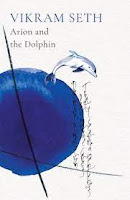
by Speaking Tiger includes Mappings (1981), The Humble Administrator's Garden (1983), All You Who Sleep Tonight (1990), Beastly Tales From Here and There (1991), Three Chinese Poets (1992) and the libretto Arion and the Dolphin (1994). These seven
slim volumes have showcase the
breadth of Seth’s genius and the recurring designs in his work, a kind of
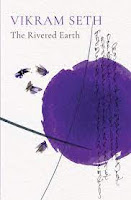
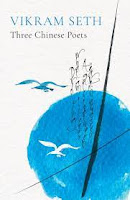
lyrical leitmotif. The cover designs by the Alphales are embellished with the globe
motif that is so much a part of Chinese culture, whether lantern or sun disk, accentuated
by calligraphy and flights of natural fantasy from the poems, each in a
different shade with a slight positional shift. The whole reflects the
favourite preoccupations of Seth’s work and making this a collector’s series
indeed.Anjana Basu
The
publication of this as the world waits for A
Suitable Girl is a chance to reflect on what we know of Seth’s well loved
poetry.
Vikram Seth’s first book of poems, Mappings, was written in his twenties, during his student life in England and California. As young poets do, he wrote about love, life and the scenes that passed before his eyes with intimacy, immediacy and inventiveness, though yes, these are the works of a poet in the making with nascent qualities of what we can read in the later Seth. Four translations of poems by Du Fu (Chinese), Faiz Ahmed Faiz (Urdu), Heinrich Heine (German) and Suryakant Tripathi Nirala (Hindi) are included in this collection of otherwise original work.
The
Humble Administrator’s Garden, his second collection of poems, refers to a garden in
Suzhou, China, one of the most famous of its kind, a tranquil space created by
a retired official for reflection. Using the garden as his inspiration, Vikram
Seth mulls over the three traditions he knows best: India, California and
China. His verses muse over Chinese noblemen and hermits; lost or deserted
loves; the night with its moonlight, loved by Chinese poets and California
lovers alike, touched by the crash of waves and gentle hush of water not to
mention musical echoes. Nature rules with the emotions of the night and a touch
of melody as Vikram Seth translates three T’ang dynasty poets—Wang Wei
(699–761 AD), Li Bai (701–762 AD) and Du Fu (712–770 AD)—who have the power to
move the world with their meditative lyricism. Seth chose them because of their
very different responses to the times that they shared, weaving together what
lies within with what surrounded them and erasing the difference of twelve
hundred years with emotion and understanding. Quiet, humble and graceful, the
collection has been given a cover to match.
It was obvious that a writer like Seth, who loves music, would write words that would eventually be sung. Arion and the Dolphin, was produced by English National Opera in 1994 (and subsequently in Rotterdam, Singapore and Nottingham).
The retelling of a Greek legend about a dolphin which
rescues arid befriends Arion, a young court musician, after he's tossed
overboard by jealous shipmates who are determined that he will not compete in a
Sicillian talent show, was set to music by Alec Roth. The opera was produced
by the English National Opera, coming on the wings of A Suitable Boy and has
nine scenes.
Though
Rivered Earth came much later, it
fits into Seth’s operatic mode. The
four libretti set to music by Alec Roth echo much of Seth’s other poetry and
brings together the influences that characterise his work – Chinese,
Californian, spanning centuries, bridging time and space. The first three
poems, entitled ‘Songs in Time of War’, ‘Shared Ground’ and ‘The Traveller’,
are about places that Seth has encountered in the course of his poetic
journey—China during the T’ang dynasty and the Administrator’s Garden, the
English house of Metaphysical poet George Herbert, and India, Seth’s birthplace
and a place to which he occasionally returns. The fourth libretto, ‘Seven
Elements’, brings together the elements of this rivered earth in a combination
that melds ageing and mortality.
All You Who Sleep Tonight is a collection that brings together lost
loves, musings from Chinese poets and Quatrains and is the one most poetry
lovers cite as their favourite. The title poem is the most beautiful but the
sense of loss and longing lingers through the pages. Vikram Seth sifts through the many shades of love—lost, remembered, and
deferred. He dons other voices like that of the poet Mirza Ghalib after the
mutiny; a German commander at Auschwitz; a Japanese doctor in Hiroshima after
the bombing, thoughts too painful perhaps to be shared in his own. He takes us
through other places, landscapes that he loves, sunlight filtering through the
early morning in landscape in Garhwal; the Lion Grove in Suzhou with its fabled
gardens and across his old poetic love the Golden Gate Bridge as he hails its
fiftieth anniversary.
All in all this collection refreshes Vikram Seth’s work in a
series that is bound to adorn shelves across the country.
Anjana Basu works as an advertising consultant in Calcutta. She has had a book of short stories published by Orient Longman, India, the BBC has broadcast one of her short stories. Her poems have appeared in Kunapipi, The Antigonish Review. The Edinburgh Review and The Saltzburg Review to name a few. Her byline has appeared in Outlook. She has 10 novels to her credit and 2 collections of poetry.
Cuckoo in Crisis
An Anthology of Poems: Poems by Women Poets
Editors: Charu Sheel Singh & Binod Mishra
Akhand Publishing House
₹ 320.00 INR
![]() |
| Anjana Basu |
Cuckoo in Crisis is so named because the editors feel that
India women have yet to find their identity. In a country where scriptural tradition rejoices in the stories of
Parvati/Sati, who rebelled against her father King Daksha, or the large hearted
Kunti who asked Krishna for the boon of endless sorrow so that she could share
his grief after Kurukshetra.
| Charu Sheel Singh |
| Binod Mishra |
Femininity lives in a world stalked by predators. Despite India’s 75 years of Independence, the independence of women remains an issue highlighted by episodes like Shaheen Bagh and many others Gauri Lakesh’s unsolved death, for one, the realise of Jessica Lal’s shooter . In troubled times, lyricism and verse are the best ways of speaking out.
***
Mir Taqi Mir, a man who loved Delhi but fell out with the Nawab and spent his last days in Lucknow where his mazar still stands. Known as the ‘god of poetry’ he was famed for the exquisite simplicity of his couplets that expounded on the human condition. He explored the love of God and the love of humanity with equal mysticism and even Ghalib was awed by his work.
The Hidden Garden explores a new translation of Mir’s most memorable ghazals allowing the reader who has enough Urdu to compare Mir’s original with the English of Surinder Deol. Gopi Chand Narang then takes the reader on a discussion of Mir’s most memorable ghazals, using an apt title because the more one reads Mir, the more riches flower.
Where translation is concerned there always has been a debate on whether translations should be literal or creative. Much hinges on the choice of a word and the translator has to discard many options to find the best fit. Those who have a glancing knowledge of Urdu will be able to skim through the verses, acquire a sense of them and then turn their attention to the English.
After allowing readers to get their fill of Mir’s ghazals, Narang takes them through what he admires about Mir’s style, the main fact being that Mir is truly a poet of countless delights and this despite the fact that Urdu was still in a rough unpolished form at the time. Mir took various influences into his verse – for example from the Persian of Amir Khusru. Mir wrote in Persian as well as Urdu, as many poets of his time did since the literary language had not progressed to include Urdu. Now however, Mir's Persian verses would have to be translated since that language is no longer widely understood - Afzaal Hussain Syed was the translator in this case.
![]() |
| Anjana Basu |
For a long while Mir has been celebrated for his simplicity of verse. However, Narang points out that this simplicity is deceptive. Mir's use of language is nuanced and for the sake of mysticism he is occasionally obscure by design. Nor is the underlying meaning of his so-called simple couplets as straightforward as previously believed. There are layers within layers and only when the reader has reached the core will the true meaning be understood.
Narang delves into Mir’s couplets and his use of long vowels to create poetic effect, styles flourishes that were then relatively unknown. Mir had the benefits of being a lapidary with a new literary language and his wide reading and sensitivity allowed him to craft the language in spurts of different inspiration.
Narang expounds on the fact that Mir felt himself
superior to the others around him – something that Ghalib later shared – and
picks out the couplets where Mir alludes to this.
This despite the fact that poets like Sauda enjoyed
more popularity with the nawabs and poetry at the time was all about patronage.
There was good reason for this because he was the first ‘all inclusive’ Urdu
poet, mastering oral traditions and transforming every day dialogues into the
stuff of literature. Mir took folk forms and innovated on them as well as
picking up from the speech of ordinary people. He also took the rekhta which
had not fully been explored in the 18th century and made it his own.
As he writes:
If Rekhta reached the pinnacle of its greatness
this was the work that he accomplished
Is there anyone who does not accept
Mir’s master mysterious touch?
Possibly the more we study Mir’s work, the more we will discover. In the meantime Gopi Chand Narang has contributed a definite study backed by Surinder Deol’s translations.
![]() |
| Anjana Basu |