Showing posts with label Love-Plague. Show all posts

Scorched hand (Love in the Time of Plague)

Paramita Mukherjee Mullick

-Paramita Mukherjee Mullick


No cars on the road, no honking, no sound.
No hawkers, all shops closed, silence around.
The husband and wife doing household chores together.
Scrubbing the utensils and polishing the sofa leather.
Very tedious in the Indian scenario, quite a feat.
In addition, sanitizing repeatedly to Covid defeat.
In the midst of this, a bowl of boiling lentil on the wife’s hand falls.
The husband is perturbed, he immediately a doctor calls.
No doctors available for home visit during such a time.
Medicines prescribed on whatsapp should be fine.
The hand is burning but for another reason she is troubled,
Her husband has to look after her and his work load is doubled.
The man who has never said, “I love you” but his actions scream love.
Went on caring for his wife besides household cleaning, wearing gloves.
Work from home from morning to night without a gap.
But caring for his wife, keeping on the scorched hand a tab.
Their love story no Historian will ever write, nor has it any fizz.
Being there for each other, that is what love is.

Love in the time of plague: Malkeet Kaur

Malkeet Kaur
HERO WORSHIP 

The glimpse of a man in white deftly commandeering life 
In the middle of a devastating human tragedy 
Made this cloistered girl fall in love again,
Cherishing the caress of every furtive glance.  
But some love stories are frozen maple leaves,
Dangling between fabrication of fertile mind and factualism.
Like a body lacking backbone, these loosely
Hanging ribs are not even unfinished businesses. 
Maybe it's the enormity of calamity, she finds solace in 
Being a part of the cataclysmic little human drama. 
She schools her stray musings as she stumbles upon 
The words like 'one sided' or conveniently side steps them
To guard, this time, something which is so bewitching. 
Every desolate night she elevates him to the pedestal.
The existence of a man championing humanity,
Thinking of her even once a while in the midst of 
Saving lives every waking hour or the possibility of such an idea-
That is enough for making her survive 
Another tumultuous day every forlorn morning.
***

Bio: Malkeet Kaur works as a teacher in a public school in Navi Mumbai. She likes to express her deepest emotions in verse form. Her poems have found space in anthologies like- Awakening of She, The Acerbic Anthology - protest poems against gender violence, The Significant Anthology, The Luxembourg Review etc. and many online journals like Indiana Voice Journal, Spillwords, Episteme, Tuck Magazine etc. 

Love in the time of plague: Boudhayan Mukherjee

Last time it was a strange light, last time it was a strange smell
The winter took away my father, the winter was very cold.
Anything may happen this time, anything may happen at this moment.
My eyes may stop seeing you, my eyes may need new light.
I may lose my job, I may lose my grade and bread.
Last time I was very brave, last time I went hitch--hiking
This year I have changed, this year I am strange.

My girl doesn't love me well, she doesn't meet me often.
The winter took away her brother, the winter killed her strength.
I can hear her mother crying,, I can feel  them softly dying.
Yet life flows on, for we shall all be re-born
A fresh mass of flesh, a fresh bud of desire.
***

Bio: Boudhayan Mukherjee, a bilingual poet, author and translator started as student editor and literary secretary of Tagore's Visva Bharati University. Has been published extensively in journals and newspapers since the mid seventies. First book of verse 'Black Milk' followed by five poetry anthologies, a collection of short-stories and books of translations, Has represented Sahitya Akademi, the prime literary institution of India, at various poetry readings and taught Creative Writing in English Indira Gandhi National Open University. A founder member and poetry co-coordinator of Srijan, one of the most renowned literary platforms of Kolkata. Editor of several literary magazines, he has been recently awarded the Swaymagata Literary Prize [2021]. 

Love in the time of plague: Elizabeth Castillo

Elizabeth Castillo

Immortal Love


a love that transcends
time and place,
a soul meeting her twin flame
in her recurrent abstract dreams
a love that defies laws
immortal love,
one that is extra-ordinary
a love that takes her far into the heavens.
changing faces,
in every century, every decade that passes
but it's still YOU my heart beats for
mystic love,
through fragments in space
illuminated by a strange force
I keep on seeing you
in every place that I go to.
centuries passed,
memories elapsed
still this heart aches
dying to be with you once more,
serendipity playing a game on us
for this love always leads me to just YOU.
immortal love,
my soul intertwined to just ONE
I have been reincarnated a thousand times,
but through all the changing seasons and lives
my spirit keeps on searching for only YOU.
 

A torpid tale: Debarati Sen

Debarati Sen
(Love in the time of plague)

A torpid tale of stoic eyes.
That dared to love even amidst a ravaging 'plague'.
An almanac of bruises hanging from the timbre wall.
Sunken shoulders bearing the burden of 
a solivagant journey.
Her spirit pulverized after every Armageddon! 
The Gods were returning home that night
after making her life a veritable Golgotha.
dismembered desires were
strewn across trenches of apathy.
That actuated the olfactory of a bloody stench. 
The stench of dead flesh
In a country cursed with a deadly epidemic.
She bit her lips and chewed the storm
That carried the grey wraith of paranoia.
Her bosom filled with the cries of her beloved.
She fondled his wounds and fed his blood clots with thrombolytic dreams.
Some day this town will be free from its vitriolic sins.
As she rose from the ashes like Lazarus
She wore her love as armor against the scourge.
She prayed to the tenebrious night
To obfuscate her soul within her stygian womb.
Infernal flames churning pallid thoughts 
burnt the synodic period of love and death.
A metric to her woe was calibrated.
A rusty dawn was born from the night's womb
suturing her wounds with the first sunbeam.
From the clouds fell the 'Raining Stars' 
and the Aldebaran of her spirit shone bright in the Hyades cluster.
Life in the time of the plague was no easy affair!
***

Bio: Recipient of the ‘POIESIS AWARD FOR EXCELLENCE IN POETRY -2023’, Tagore Award 2022 and the Sylvia Plath Women's Literary Award, Debarati is a bilingual poet from Kolkata. She has published two solo poetry collections and has contributed to more than 10 anthologies. She is a regular contributor of her poems to prestigious websites and magazines like The Antonym, The Yugen Quest Review, The Kolkata Arts, Lapis Lazuli, The Madras Courier, The Sindh Courier, The Piker Press, Chakkar, Kabitalive, to name a few. She has been invited by Samyukta Poetry and Women Empowered Poetry to read her poems. She is also an independent researcher in the genre of Disability Studies and has published National and International articles on the same. Her article titled, “Women and Disability: A Double-Edged Sword” has been published in Law Mantra (International Journal of Legal Research and Governance, (ISSN: 2321-6417). 

Unwavering Love: Snigdha Agrawal

Snigdha Agrawal
Love in the time of plague

'Baanjh' ... 'Baanjh' keeps ringing in her ears even after fifty years of married life. The most demeaning word addressed to a woman.  A word that hurt much more than if they had called her a whore or slut.  The word that haunted her forever. And if it wasn’t for him, she would have been dead by now or become a basket case.  He had stood by her through thick and thin and came to her rescue every time she felt like throwing in the towel and walking out.  Not once but on several occasions, she remembers the humiliation she suffered at the hands of the ladies of the house. Those same women had welcomed her as the new bride with great expectations.  Expectations she could not meet. Not that she hadn’t tried hard enough, but some things in life are out of one’s control.

Pranati remembers dressed in bridal wear, stepping over the 'Choukat' with Ranjan following close behind.  She was told to kick the ‘Kalash’ of rice kept at the doorstep to the sound of conch shells blowing and ululating in rejoicing. Then being asked to dip her feet in the bronze ‘thali’ half filled with the red ‘alta’ and made to walk to her mother-in-law, seated on her throne, leaving behind her red footprints.  Ma had lifted her veil, kissed her forehead, and slipped in the red and white bangles inlaid with gold threads in a paisley design.  The 'loha' bangle gold overlaid was made to fit the size of her wrist.  "This is what proclaims you as Ranjan's wife. Never to be taken off", is what she was told in a firm voice by her mother-in-law.  Pranati understood its significance later when Ranjan explained the symbol of wearing the 'loha' to ward off negativities.  Worn with pride in the Bengali community.  Born into a North Indian family, this came as a pleasant surprise.  The 'loha' now hangs on her left wrist, two sizes too big. 

The drama all started after two consecutive miscarriages and on the auspicious day of her fourth marriage anniversary.  No greetings were forthcoming from Ma and other family members.  She noticed the look of concern on Ma’s face as she called aside Ranjan, speaking in low tones audible to her.  “Baba…it’s time you thought of getting another wife.  I checked with Pranati’s gynaecologist.  She will never be able to carry full term.  Repeated miscarriages will only harm her physically and mentally.  I’m not trying to break up your marriage.  It’s just that I would like to hold a grandchild before leaving this world.  You know of my health issues.  My days are numbered. Being the only son, I look to you for giving me a grandchild.  Is that too unreasonable a request from a mother?”

Ranjan stood speechless and visibly unsettled.  The blood rushed to his face, and his hands shook in anger, as he swayed from side to side, trying to process all that Ma implied in her guilt trip speech.  Pranati waited for his delayed response.  And he did with firmness. “How could you ever come up with such a preposterous idea?  Place yourself in Pranati’s position.  Would Baba have taken another wife, had you not been able to produce a child?  I think you are losing it.  Let me make it clear here and now Pranati is my wife and nothing can change that status.  It matters little to me whether she becomes a mother or remains childless.  We have each other and that is more than what we desire.  If God so wills, we will become parents.  If not, that too is acceptable.  Ma…there are so many options available for childless couples.  We could adopt…we could try through surrogacy…the list is endless.  If you ever raise this again, let me be clear, Pranati and I will break away from this family and live independently”.  This time Ma’s face turned blue as the message took time to sink in. She couldn’t afford to lose her only son, for the sake of a grandson.  Swallowing her pride, Ma refrained from following up on the conversation.

Pranati was close to tears when Ranjan found her standing like a statue near the bedroom window.  He held her close to his chest.  “You are my ‘pran’ Pranati and nothing can separate us.  You heard what I told Ma.  Forgive her if you can”.  Pranati put this behind her and pretended she had not heard the mother-son dialogue.

Then the cracks started appearing at weddings, auspicious occasions, thread ceremonies, and even during Shradhs (funerals).  In subtle ways.  Cracks that developed into deep chasms. She first noticed it at Ranjan’s niece’s ‘Haldi’ ceremony.  The ladies had gathered in the room to apply ‘haldi’ and bless the bride.  When it came to her turn, she was told the auspicious hour was over and that the bride had to go for her bath.  The next time was when she was standing in the cue to welcome the groom and their party at the reception venue.  She was swatted off like a fly with some vague excuse with stern directives from Ma to attend to the guests. Studiously avoided participating in any religious events. At first, she dismissed them as her over-sensitive mind playing tricks. 

The last straw on the camel’s back was at the sacred thread ceremony of Ranjan’s nephew when he turned thirteen.  She was his godmother; hence, her role demanded she participates in the five-day-long religious ceremonies.  As was customary, Pranati was to hold him back from taking the path to becoming a monk.  To her dismay, the door was slammed in her face, preventing her from performing her customary rights.  Ranjan was witness to the whole sequence of events.  The otherwise cool person that he was, exploded with anger.  “This is no way to treat Pranati.  You all seem to treat her like the plague, just because of her inability to carry a child in her womb.  Is that her fault?”  Without waiting for any response, he pulled Pranati by her hand and stormed out of the room.  

Ranjan and Pranati moved out of their ancestral home, ignoring the pleas and wailing of his mother, sisters and extended family members present. Pranati tried her best to dissuade him, without success.  “You have suffered enough humiliation at their hands.  No more.  I know how hurtful it has been for you all these years.  We are ending this now.”

Within a year of their moving out, Ma passed.  Ranjan the dutiful son, performed the last rites but still carries bitterness in his heart for the treatment meted out to his wife. 

Love took precedence over Mother, sisters and family honour. Ranjan went out of his way to protect Pranati from further acts of humiliation.  For Pranati the derogatory word ‘baanjh’ stuck like ‘quick fix’ in her mind.  
***


Baanjh = barren woman   
Choukat = threshold
Kalash = pitcher
Thali = edged plate
Alta = red liquid dye used to decorate hands and feet
Loha = iron bangle worn by married women
Haldi = turmeric (ceremony where turmeric is applied on the bride on the day of her wedding)
Shradh = religious rites performed on the 13th day after passing.
Pran = life


Love in the time of plague: Ankit Raj Ojha

Ankit Raj Ojha
Morning

Papa finds poems in an old diary:
some written before I was born,
others when I was a week old.
He asks if I could edit the pieces.
Could a day be better spent?
***


Scrutiny

People are words:
read them long and
they are indiscernible.
***


Happily Ever After

No love is eternal;
some feign immortality
by fatal intervention.
***


Bio: Ankit Raj Ojha is a poet, assistant professor of English, former rock band frontman and former software engineer from Chapra, Bihar, India. He works with the Department of Higher Education, Haryana, has a PhD from IIT Roorkee, is guest editor of Essence & Critique: Journal of Literature and Drama Studies (Bing├╢l University, Turkey), is a consulting editor with Routledge, and co-edits The Hooghly Review. Ankit has poetry, short fiction, research articles and reviews published/forthcoming in Johns Hopkins University Press, Routledge, Indian Literature (Sahitya Akademi), Stanchion, Native Skin, Outlook India, The Dillydoun Review, Dreich, and The Broadkill Review among other venues. He is a winner of the Hawakal Young Poets 2022 series and author of Pinpricks (Hawakal, 2022). 
Twitter: @ankit_raj01
Instagram: @ankitrajojha1

Poetry: Love in the time of plague

Soumik Kumar De

The Hidden: Soumik Kumar De

And when he met her first
She was masked 
Deep blue eyeballs, lavender frons 
Air drawn locks and the pearly drops
Everything  mesmeric
Everything magnetic .

Yet he never heard her speak
Never saw her smile
The more mysterious was she
The more he got crazy. 

And the day came finally 
He put his hand upon hers
Eyes met the eyes
An aggression, a retreat
A whisper, a fast beat.

Still she was masked, still silent
But he grew more impatient 
The mask was drawn, 'the hidden' shown
…………
The unveiled face downwards bent
        O horror! O horror!
The chin was burnt, he came to learn
         Of the attack brutal.

Moment passed, a deep hush
              A little linger
Kissed he now, the fleshless blush
       Finger touched the finger. 
***

Poet’s Bio: Mr Soumik Kumar De, a teacher by profession and poet by passion, writes poetry both in Bengali and English. So far his poems have been anthologized in so many national and international publications and web journals like the prestigious Setu journal, The Indian Review, Borderless Journal, Aulos:An Anthology of Poems, Caravan, Insalutas, Innsaei journal to mention a few.

The Namesake: Milan Mondal

Milan Mondal

(Love in the time of plague)


Let’s embrace the Plague of Love.
Let the Plague spread 
From head to Heart
And fix its resonance.

Let the vessels be full
With the plague of Love.
 Let the Love transmit 
And make it a Pandemic.
***

Bio: An Assistant Professor and a doctoral research scholar, Mr. Milan Mondal, finds pleasure in writing poetry. He has been published along with literary stalwarts of recent time in journals and anthologies of international repute. His oeuvre includes poetry, flash-fiction etc. He may be reached at milanmondalapengnrc19@gmail.com.

Love in the time of plague

Nivedita Roy

Nivedita Roy

She was torn apart with her handicap to balance her professional and personal life.
The Hippocratic oath masked all other thoughts. The surge of patients in the hospital was rising by the hour. She was caged with ailing and infected patients. Her physical being was trapped in the ppt kit, but her thoughts lingered between her loved ones and her duty.
She was on the verge of breaking down and running away from all this ‘call of duty’ jargon.
She overheard a few colleagues complaining about no one cares. Even the system was helpless against this fury of nature and wide spreading virus. The medical staff and team were under immense pressure. 

Her heart was heavy with guilt of leaving him and her baby at home . She had not been home since a fortnight. 
Today she felt remorse for all those times she threw a tantrum at home, argued with him, hurt his feelings by vocalizing her regret of marrying him. How could she be so ruthless?
He stood by her in this crisis, her emotional war of choosing her duty over family. 
What were his thoughts at this moment? Is he regretting his decision too?
Is he going to be her forever knight in shining armour? 
She had been sitting in the canteen over a tepid cup of tea lost in her din of emotions. 

Her cell phone buzzed. It was her “only moral support”, her spouse. They conversed for a while and she felt a wave of calmness engulf her. His assurance to look after their child well, his faith in her capabilities, his silent love for her made her feel better. 
His words rang in her ears , his caressing voice made her nostalgic. She wanted to cuddle in those strong arms. She wanted his warm breath on her crowning glory. She wondered if she would ever have those moments again. Will she leave the hospital alive? 
Her only solace remained that he loved her and her precious off spring was in safe hands.
At this juncture she had to carry on till more help arrived and she would be able to go home for some rest and breather. 
There were many others like her who had chosen duty over safe confines of their hearth.
They too had the pangs of separation and stressing circumstances. 
She resolved to face the challenge with a renewed hope of going back soon with the precautions of isolation and regular tests. 
With love in her heart and courage in her eyes she walked back to the ward to tend to her charges. 

The Plague Paradise

Soma Debray

Soma Debray


The first raindrops touch the ground
As plague twines around mankind
Hissing black fumes of death. 
Pink cherry blossoms
Float in the air 
Whispering sweet nonsense.
Black lips cool the fever flushed cheek
As Grim Reaper walks the floors creak.

Plague, the mistress of death
Steal lives. 
But cannot drown the lock-gate of birth
As new lives glide down the gap.

Hope lives on amidst the chaos
Fluid and sweat are not enough
To drown blossoming life.
The tight embrace
The warmth of the kiss
Flow down the veins of life
Hurtling headlong 
Towards a new destiny.
***

Bio: Soma Debray, a teacher by profession, loves to travel on the wings of fire, as new readers blossom along the black road called life. Her muse are the teeming millions who never let her forget the wild variety in the chaos called life. Her epitaph is her creations that shall live on beyond the flaming pyre on the sands of time. 

Love in the time of plague

Brindha Vinodh

Brindha Vinodh


Love in the time of plague
is like the sun that is needed in Winter-
to offer warmth and to drive away darkness,

love in the time of plague 
is the hot soup needed on a cold day.

Love is fluid
when it adjusts its shape,

love from the marble eyes of a child, 
smooth and sparkling,
 radiates positivity and hope
at a time when an adult is plagued by cobwebs of worries,

love takes the shape of a tonic that can cure the plague of
hate man infectiously spreads in the name of caste, creed and greed 
to acquire larger boundaries,
 composition of the tonic being soothing words, warm gestures,
 greetings,

love is air when it flows freely,
borderless, bonding cultures through art and poetry,
it can be felt, absorbed through each vein and pulse beat of your heart,
even when war shatters the wings that your dreams were about to take.

Love in the time of plague  
is like the sun that is needed in Winter-
to offer warmth and to drive away darkness,

love in the time of plague 
is the hot soup needed on a cold day.

LOVE - NO STRINGS ATTACHED…

Hema Ravi

Love in the time of plague: Hema Ravi


Behavior of the heart defies the intellect,
scientific studies continue to baffle. 
 
Mystery of the ‘virgin birth’ demystified. 
Daddy revealed after spotting the tiny 
‘loophole of a few millimeters;
discovered in the ‘partition board’ separating
the female gibbon’s cage and the ‘display area’
where the ‘male’ was temporarily housed. 
 
More baffling is the theory
that animals remain monogamous
in order to ensure offspring 
have better chances of surviving to maturity.
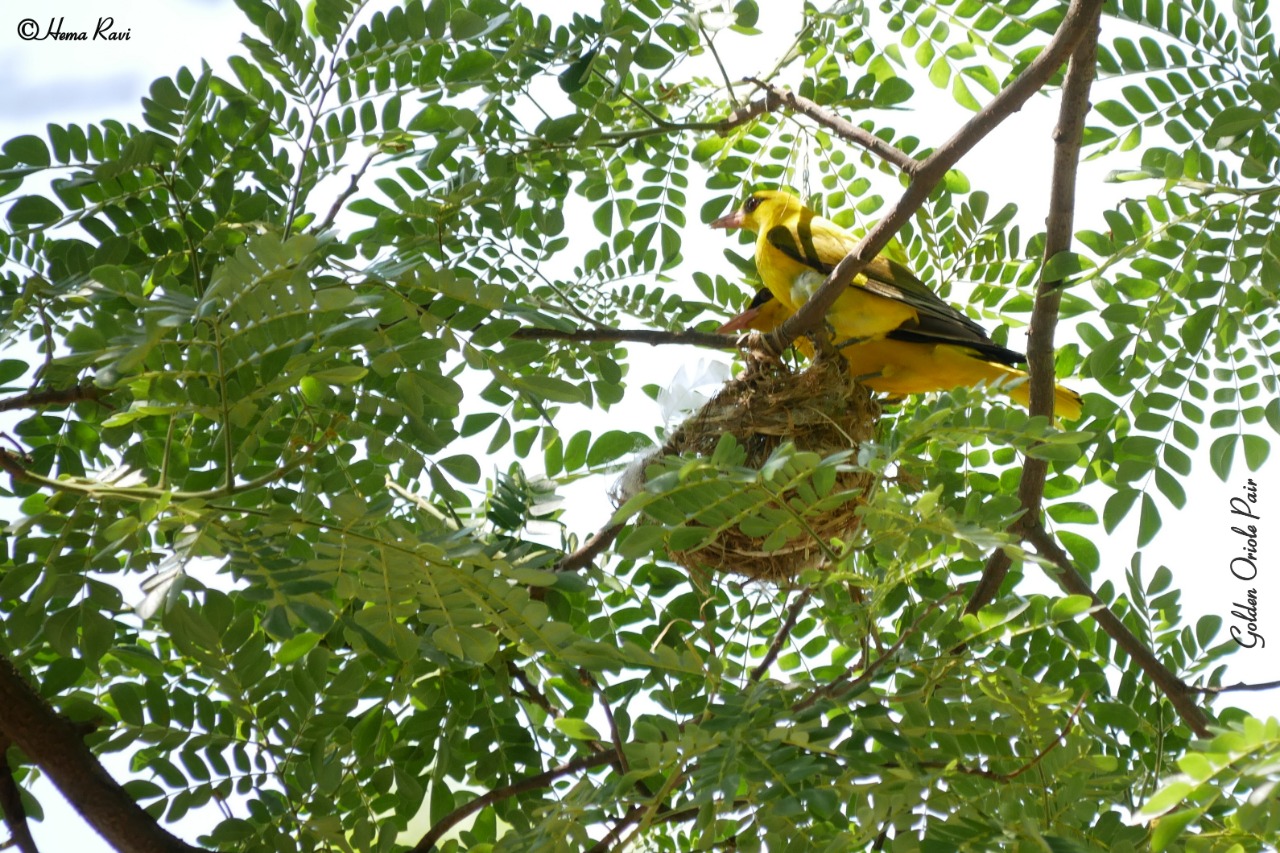
Golden Oriole

The chemistry of human love complex, powerful
and emotional revolves around
fondness, liking, infatuation, lust, and pure love
that impacts relationships in unique ways. 

Love, devoid of ‘social conditioning,’
strengthens the bonding among humans
trapped in materialistic comforts
and poverty of emotions.

Love in its purest form transcends physical intimacy,
intense passion and commitment for progeny.
Plague, Pandemic, Pollution fades into oblivion
Such love is Pristine – blasts off, travels
faster than light and sound,
impregnates and breeds ‘pure love.’


Note: After reading a newspaper report about “Monkey Miracle” in Kujukushima Zoo & Botanical Garden, Nagasaki, Japan.

Love in the time of plague

Pramila Khadun

Pramila Khadun


Buddha says that all composite things
Are perishable and we should strive
For our liberation with diligence.

In the days of the plague, Covid-19
Where nations at large suffered and many still suffering,
Scientists still struggling to find the perfect vaccine,
People are continuing to lose dear ones
And the ecoes of their cries
Are clearly heard in distant shores.

Every sunset knows a sunrise
And every end of the tunnel knows light.
Maybe humanity will see light
After wilting and withering in terrains
Hot and dry without a ray of hope.

Amidst this marathon task of survival,
Humanity's inner self, re-engineered,
Revolutionized, realized the meaing of love,
Where all men are brothers
And man is higher than what he thinks.
Our perceived differences are evaporating
We are coming to the conclusion
That love is that binding force 
Which unites us all under the same umbrella.
***


Bio: Pramila Khadun is a poetess and writer from the Republic of Mauritius, Indian Ocean. To her credit, she has eleven books, eight of which are poetry collections. She has contributed widely in many international magazines and anthologies.In 2015, she won the Reuel International prize for excellence in writing and literature. In February 2023, she won the Ravindranath international poetry contest where she stood in the second place. In December 2022, she was awarded The Africa Women Leaders  award by World Leadership Congress and awards. 

The Antidote: A Love Song for a dystopian world

Santosh Bakaya

(Love in the time of plague)

Part 1

There was fire everywhere! 

Folks were choking. 

Gagging 

Staggering

Dragging their feet.
Seeing red, beating their heads.  

The ambitious ones were still running the race. 
Their heads humming like hills of red ants, 
panting, heaving, grunting, growling, howling. 
But still prowling.   

Fast-paced!

The wheeler-dealers, pranksters, mobsters,
lumpen elements, songsters, mischief-mongers,
rumor-mongers and hate mongers
were running. 

Running. 

Running that despicable race. Helter - Skelter.

Not disgraced by the fire that they had spread, 

swaying with an insidious arrogance, running the race. 

 Fast-paced!

***


Part 2

Two rats had furtively sneaked out, 

to sit under a tree whispering sweet- nothings
 into each other’s' ears, as raucous shrieks rent the air.
“Black Death! Black Death!”


But the two human rats sat.

Snout to snout as humanity raced on.

 
Fast-paced!


One touched his lymph node 

Groaning, eyes fixed on the road. 

"I have a severe headache," whispered he.

"My thirst I want to slake," whispered she.
They soothed each other's fears, wiped their tears.
 Frightened arms tightening around each other,
bursting with love.  

They had no idea whether it was
Bubonic 

Septicemic 

Pneumonic

But the rumor was strong 

that things had gone all dismally wrong. 


"It is the plague of hatred spreading. 
 But there is no cause to dread.
We shall overcome."
Whispered the love-besotted human rodents 
clinging to each other, singing songs of hope
 smothering each other with love, unadulterated.  


Fire, fire, everywhere.

Harsh sounds kept grating. 


Snout to snout. 

Under a tree, they sat. 

Death would come knocking any day.

A skeletal stray hobbled towards them.


'Beware", thundered the gray clouds.
Would they be gobbled by the loud, raucous clouds?  

Louder they grew, endangering the sky. Sigh. 

Was it time to say goodbye?


But they sat, snout to snout. Not plagued by any doubt,  

assured that when the plague was over, 

love would still remain, singing its melodious refrain.

 
A little distance away,
a red passion flower bloomed, piercing the gloom.

A Siberian husky, a Labrador, and Iguana walked together 

braving the inclement weather. 

Strange, but true, a woman strutted on the ramp
with a kind-looking lizard, holding a bright lamp.

Was some wizard playing tricks? Things appeared surreal.

*** 


Part 3


A blizzard was in the offing.
Ah, it was a blizzard of love.

Love-mongers had reclaimed the beleaguered streets.

There was a flash mob dance, prancing, 

hurling love glances at each other,
smothering each other with hugs,
treating each other with loving warmth. 

A radiance oozed, tugging at hearts.


The plague of hatred had found an antidote.

The dark, dreary night, removed sleep kinks
from its eyes and scurried away. 

The sun peeped from behind a canopy of clouds,
 sprinkling them with gold dust.
Love rained.
Love reigned.
Somewhere someone hummed,
‘It’s love, love love Love in the time of plague” *
Love had really reigned. Nothing appeared vague.  
Nothing appeared vague. 
The fire of love was spreading

 
Fast paced


Folks were choking. 

Gagging. 
Choking on love
Choking on love

Fast paced


Lyrics:  Dan Berne, song from album, Quarantine Me


Poetry: Gopal Lahiri

Gopal Lahiri
Orphan Memories

I open a diary I use in university
and I see her handwriting at the edges,
much precise text,
each of her ‘T’ looks like tiny clove,
the splendor of the tuition days goes past,
the pages are now yellow leaves.
I write letters and store in a sleep box,
of fountains, raindrops, moonlit bloom,
dreams a little,
always waiting to pick her up
time and again
from the street corner near the park.
I never think restraint is my thing.
setting against the tenderness,
my thoughts touch her shoulder,
her luminous eyes.
The aroma of the coffee and the smell
of burnt toast always pin our whispers.
There is no sense perhaps in what
we converse in silence,
what we keep even of ourselves,
we lean towards each other in the library,
in the twilight glow
drawing love lines in our palms over and over and over.
It’s the new sameness that I count now
innocence gathers between the texts
I know nothing to come after this,
I see the trees beyond the window frame
dahlias shed their petals
white, red, yellow, aqua.
Standing in front of a mirror in one
summer evening, looking
for both hands and her look more immense than sky,
I still remember,
everything falls apart for her in the
time of dark shadows of plague
and I take my hands to contain both in me
and my hearts, and my orphan memories.
***


Devour

It is ancient, it is a magical composition,
convince the moon to shine in our glow.
Pulsing brighter and brighter in turn,
how cruel are the hands of pestilence,
It’s mostly us but not always, how many
fingers find and peel them layer by layer.
And now we hear our breathing
the fullness of me, the fullness of you,
No matter, in our wounds, in our hunger
we collapse into one another in distress.
It moves my heart to see my face
simmering in your wide eyes
We devour the night sky, the brimming stars
refuse to forget each other’s presence.
***

Bio: Gopal Lahiri is an India based, bilingual poet, critic, editor, writer and translator with 29 books published, including eight solo/jointly edited books. His poetry is published across anthologies and journals of India and abroad. His poems are translated in 16 languages and published in 12 countries. He has been nominated for Pushcart Prize, for poetry in 2021. He is the recipient of Setu Excellence Award, US, 2020.