The credit for cover art for December 2022 issues of Setu (English) and Setu (Hindi) goes to renowned photographer, artist, and author Banshilal Parmar
Showing posts with label 202212E. Show all posts
Showing posts with label 202212E. Show all posts
बंशीलाल परमार: Banshilal Parmar
सेतु के दिसम्बर 2022 के अंग्रेज़ी व हिंदी अंकों के आवरण चित्र प्रख्यात फ़ोटोग्राफ़र, चित्रकार, व लेखक बंशीलाल परमार द्वारा लिये गये हैं।


Contents, December 2022
SetuVolume 7; Issue 7; December 2022Setu PDF Archives
EditorialPoetryExclusiveArt and Aesthetics: A Roundtable
Photo EssayLanguage PedagogyCultural Roundup: TheatreAuthor of the MonthShort FictionBook Review
Setu Initiative: Setu Series of Virtual Readings
Special Edition: Children's World Guest Editor: Meenakshi Mohan |

Guest-editorial: Meenakshi Mohan
 |
| Meenakshi Mohan |
Children’s World
(Curiosity, fantasy, imagination, and wonder)
Imagination is more important than knowledge. For knowledge is limited to all we know and understand, while imagination embraces the entire world, and all there ever will be to know and understand.
Albert Einstein
Children’s world is enlaced with questions like why, what, and where. From the time they open their eyes, their world is full of wonder and fantasy. Have you noticed the wonder in their eyes when they see the spider knitting a web, rain making puddles, or the snow falling from the sky? What goes on in their minds? When I was young, I wondered where the rain came from and what made the rainbow. The ants used to fascinate me when they would carry loads of food on their tiny beings by pulling them and filing in a line to ant holes. I often pretended to be a bird and fly like them, but alas! I also felt sorry for the boys and girls on the streets of Calcutta begging for food. I wondered why they were different than me. Yet, my heart was full of empathy for them when I learned their stories from my mother. Children’s world is full of curiosity, imagination, interpretation, forming meaning, and finding answers.
When my children were young, I would create a story on the spur of the moment, and thus came the stories of Mr. Puppet, who lived in the vent of our apartment, and a Tinker Bell Fairy, who lived under their pillows to give them sweet dreams. And these stories and many more have now found their way to my grandchildren. One day, I was reading a picture book to Veda, my two-year-old granddaughter, Are You My Mother by P.D. Eastman. The story was about a baby bird who just came out from the egg but did not know what his mother looked like, so he went looking for his mother. She intently listened to the story and tried to grasp the meaning. Finally, after reading the story several times to her, I stopped and said, “The egg jumped and jumped; then what happened?” With a twinkle in her eyes, she clapped her hands and said, “And Veda came out.”
One day, we were driving by the National Mall area in Washington D.C. she looked at the Washington Monument and said, “Look, Ammu, such a big pencil. Maybe, it is writing something in the sky.” Children are egocentric learners. They see the world through their lenses. As teachers and parents, we can enhance their learning and help them differentiate between “I” and the “outside world.” I am a children’s person. For me, Children’s Day is every day. Their thinking and how they formulate reasoning fascinate me. That was why Dr. Sunil Sharma of the Setu Bilingual Journal asked me to Guest Edit for the Children’s special for December; I accepted it readily despite knowing how tight my schedule for December was going to be.
Jean Piaget, a child Psychologist who is well known for his Cognitive Development Theory, suggested that children move through different stages of learning. His theory focuses not only on understanding how children acquire knowledge but also on understanding the nature of intelligence. According to him, children are active learners. He called them “Young Explorers.” They observe and assimilate information, interact with the environment around them and build upon existing knowledge and adapt previously held ideas to accommodate new information.
Another important figure in the field of child development is Lev Vygotsky. He believed that curiosity and active involvement with people around them, e.g., parents, teachers, caretakers, and peers, play significant roles in their learning. The roles of adults work as scaffolding or structure for children through which they can climb the ladders of learning. Eurie Bronfenbrenner, through this Ecological Theory, supported this view by saying that children learn through their micro and macro environment.
Literature of all forms plays a vital role in enhancing and enriching children’s world. They help in developing critical cognitive skills in children. They learn to appreciate their own culture and the culture of others. Emotional intelligence and empathy development could also start early in children. According to Bruno Bettelheim, a psychologist, children’s literature also helps young ones cope with their anxieties and dilemmas by expressing their stories verbally or through their writings and arts. The other day just before Christmas, my daughter told her two-and-a-half-year-old daughter about children who are not so fortunate to have many toys. She quickly went over to her toy basket and sorted out the toys she wanted to give those children. Children’s literature is a gateway for children to enter gently into the world of awareness and learning. It could act as an instrument of mediation for the development of children in a participative and critical way in the learning process.
Exposure to literature could even start before birth. I remember my mother telling me a story about Abhimanyu and chakravyuha. When Arjun’s wife Subhadra was expecting Abhimanyu, Arjun explained chakravyuha (Mahabharat) and how to penetrate it and enter.
Abhimanyu was listening intently from the womb, but he could not listen to the later part on how to exit as Subhadra fell asleep. Noam Chomsky, an American Linguist and Cognitive Scientist, spoke along the same lines. Through his experiments, he justified that children’s brain comes prewired with language and cognitive skills from the prenatal stage – they respond to their mothers’ voices and music by their movements and heart rates going up. So, storytelling, poetry recitations, or enacting stories are essential for children’s social, emotional, cognitive, and physical development. They are significant for their healthy growing up.
This Special on Children’s World is tapping into their questions of “who, what, where, why, when, and how.” As it is said that questions are more important than answers, let children see the world through their lenses. We, as adults, could build the safe, nurturing scaffolding around them, so they have the support to see the world around them – both the good and bad. Our responsibilities as adults are to expose them to a wide variety of literature – poetry, stories of all genres – mythological, historical, folk tales, fables, fantasies, dramatics, illustrative stories, etc. Children’s literature has the task of transforming dreams into realities. Early exposure to literacy is a door-opener in bringing them to enjoy leafing through the pages of their books and writing, illustrating their works.
I would like to thank the Setu Editorial team, especially Dr. Sunil Sharma, for asking me to Guest Edit for Children’s Special (December 2022) – a topic close to my heart. Lastly, I want to thank all the contributors for their writings and illustrations, validating that we all have a “child in us.”
Meenakshi Mohan
Guest Editor, SETU, December 2022, Children's World
Special Edition: Children's World
Featured Authors
Dr. Meenakshi Mohan Bio:
Dr. Meenakshi Mohan, an internationally published writer, is a scholar, art critic, children’s writer, painter, and poet. She taught at universities in Chicago, Boston, and, more recently, Towson University in Maryland. She received several awards for her excellence in teaching from the universities she has taught. She is listed twice in the Who is Who Among American Teachers.
She specializes in Early Childhood Leadership and Advocacy. She has published widely in this area and presented numerous papers and workshops. Some of her academic writings and books include Motivational Learning and Art Integrated Curriculum; What is Education? Art, The Emergence of Literacy and Motivation. Her book reviews, art critics, interviews, and poems regularly appear in different journals and anthologies. In addition, Stanford University digitally houses her writings in its initiative of Life in Quarantine. She is on the Editorial Team for Inquiry in Education, a peer-reviewed journal published by National Louis University, Chicago, Illinois. She reviews, edits, writes articles and does academic book reviews and editorials as an editorial member.
She is a bilingual writer and
writes in Hindi and English.
She authored several children’s books, including The Rainbow in My Room, The Gift, and The Rebirth of the Demon, and coedited an anthology for children’s poems. Some other books to her credit are Tamam Shud, Poems of Kshitij Mohan, and Tapestry of Women in Indian Mythology. Currently, she is Guest Editing a section on Children’s Special for Setu Bilingual Journal.
She recently had a solo exhibit of her paintings in Potomac, Maryland. Most of her paintings are in private collections. She is nominated for January 2021 as an Artist of the Month by DCSAACI (DC South Asian Arts Council, Inc.) - A South Asian Cultural Ambassador for the DC Metro area. She is a recipient of The Panorama International Literature Festival Award, 2022, and the Setu Bilingual Journal Award for Excellence, 2022. She has been featured several times in the local journals in the Maryland area.
Some forthcoming projects include:
· Two Children’s Storybooks with Integrated Curriculum Resources for Educators and Parents.
Meenakshi lives in Maryland, USA. www.meenakshimohan.com
Of Children’s world and other things
 |
| Sunil Sharma |
The prime function of the children's book writer is to write a book that is so absorbing, exciting, funny, fast and beautiful that the child will fall in love with it. And that first love affair between the young child and the young book will lead hopefully to other loves for other books and when that happens the battle is probably won. The child will have found a crock of gold. He will also have gained something that will help to carry him most marvelously through the tangles of his later years.
---Roald Dahl
Somewhere inside all of us is the power to change the world.
– Roald Dahl: Matilda
Enid Blyton.
Chandamama.
Amar Chitra Katha.
Nandan.
Comics.
Harry Potter.
Children's films and literature.
Of the many influences shaping up the imagination and value-system of the kids, these precious resources as aids.
Making them face the grim realities of the adult world, monsters and fairies all.
You can add videos and games and the Marvel Comics universe to this growing list.
Of late focus is back on things that can make the kids integrate with their immediate contexts and express their feelings through songs, dance and painting; the latter, an immediate mode and medium of sharing their internal landscapes through colours and images; trauma and recovery through this outlet of communication.
This month's special section is on the unique world of the children. How do they create it and dialectically, get created by the same.
Writings---prose and poetry and visuals---that comfort them, speak to them and engage the young audience in themes that are as significant to the young-age demographic as for the grown-ups, parents, policy-makers and the early-childhood educators---and, of course, to the creatives, spinning realms fantastic for them.
Guest-edited by the prominent artist and children's author, Meenakshi Mohan, the curated section brings together an impressive array of well-known writers writing children's concerns into literature and art on a common platform.
Pure delight!
Talking of the central aim of such an emerging field, of her overall experience as an editor, writer and illustrator, Meenakshi shares via the guest-editorial an important insight about this kind of literary project for the discerning little readers, alert, curious, full of questions; in brief, alive in every tissue of their body and cell of brain: "Our responsibilities as adults are to expose them to a wide variety of literature – poetry, stories of all genres –mythological, historical, folk tales, fables, fantasies, dramatics, illustrative stories, etc. Children’s literature has the task of transforming dreams into realities."
It is another first for Setu---like the earlier special sections on: Indigenous Voices of India, the British Working-Class Poetry and much more.
Happy to be of some service in the spread of fine thoughts!
Other features add further value to the general section. Roundtable, roundup, pictorial essay, prose, poetry, reviews.
Grateful to Meenakshi Mohan and all the featured writers in this month for extending support to the journal.
Good bye 2022!
Welcome 2023!
With very best wishes,
Sunil Sharma
Editor,
Setu (English)
Toronto, Canada
Toronto, Canada
Waheeda Hussain (Children's World)
 |
| Waheeda Hussain |
"A zebra married a doe,
And wanted her to wear stripes for a show.
She did not yield to his demand,
And refused his command.
And ran away with her deer Joe.”
"On the day the queen lost her crown
Her brow wrinkled into a permanent frown
In a fit of anger
With a clangour
She ran in her chamber and had a breakdown.
“There was a donkey
Who was swanky.
He walked the aisle
With grace and poise.
And allured his bride, Jenny.”
“An Elephant married an Ant
And they chose to live in a tent.
A storm came down one morn
And their abode was all gone.
Now poor Elephant lives with in- laws and laments day and
night.”
“There was a jolly good fellow in New Jersey
Who lived on his wife's mercy.
Earning he had none
Never any work for living he had done.
He was known by the name Hen pecked Percy.”
BIO Note: Waheeda Hussain
Waheeda Hussain is a Blogger, an Editor and a Poet from Jabalpur, India. She is a Senior School teacher by profession and her experience of teaching in school spans over twenty-three years. She has a passion for writing short stories and poetry. She is also very active on different social media platforms and had won many awards and appreciation certificates. She has co-authored 14 National and International Anthologies and her poems have been published in many ezines. She is an editor of e- magazine Brahmand and Editor of Collection of poems Shajar ke Chaon Tale - The Poets Scribbles' and गूँज- Breaking the Shackles.
Vinita Agrawal (Children's World)
 |
| Vinita Agrawal |
Toady
The little toad by the lagoon
Lived alone under a mushroom
In rains when worms ran for shelter
Butterflies flew helter-skelter
Toady called them to share his room.
Now it so happened one bright day
the scorching sun was bright and gay
Toady was so hot he could cry
His warty skin began to dry
Water was must to keep heat at bay.
Fish and crabs invited him in
Water did sooth his shiny skin
Naturally he plonked right inside
Bliss, to feel water on all sides!
The sun wouldn’t make his dermis thin.
Helping others is a fine thing
It does makes you feel like a king
Be nice to everyone around
It’ll cheer you up on the rebound
So, go give out a happy ping!
Bio Note: Vinita Agrawal
Vinita’s latest collection of poems The Natural Language of Grief was the winner of the Proverse Prize 2021. She is Poetry Editor with Usawa. She co edits the Yearbook series of Indian Poetry in English. She is on the Advisory Board of the Tagore Literary Prize and is on various councils for social justice.
Swati Pal (Children's World)
Thou shalt not snitch: Mohan’s story
Swati Pal
Once there was a boy called Mohan. He was called Divakar at school and Mohan at home. Divakar means the Sun, and Mohan is one of the many names of Lord Krishna, known for his delightfully mischievous and loving ways as a child. Divakar’s sunny smile could illuminate the world, and he was as loving as Mohan or Lord Krishna.
Mohan was good at studies, better at excitingly communicating things, and best at athletics! He could be so entertaining that everyone smiled when he entered a room! He was quite the centre of attention.
Divakar pursued Engineering and
went to Bhubaneswar to study Electronics and Telecommunication. He made friends
quickly. He loved to play basketball and football when he found time from his
studies.
One early August evening, when his mom was getting ready for a birthday party she got a call from one of Divakar’s friends. He said, “Aunty, nothing to worry, Divakar has had an accident, and we have brought him to the hospital. It’s very minor, only a cut on his finger.”
She spoke to Divakar, and he repeated the story, saying it was nothing serious, but he added that he wanted to come home to Delhi.
She said, “If it’s only a cut on the finger, why do you want to come home?” She asked to speak to the doctor, who had obviously been instructed not to give her the whole truth.
He hemmed and hawed for a bit and then said, “Well, it’s nothing serious. Just a bit of a bone loss”.
The words ‘bone loss’ completely shook mom. She realized that he needed to come home.
He flew back with a drawn face
but with a smile on it. His right hand had a thick bandage around his middle
finger. He said he had been given a couple of shots and painkillers.
As they went to the hospital, Divakar had only one instruction for his mother, “You are not to see when the bandage is opened.”
She wondered why he was fussing. A little later, however, when the bandage was opened, and she saw the look on the doctor’s face, she realized it was pretty bad. She saw that the top segment of his finger had been sliced off. It was a bloody mess. She almost fainted but Divakar still had a smile, albeit pained. The effect of the painkillers had obviously worn off. It was decided that the wound would have to be closed with grafting as the exposed bone was liable to be infected. The grafting took place and then followed a harrowing time of constant excruciating pain. Slowly the pain receded.
When everyone asked Divakar how he had managed to injure himself, he said that he had slipped on pigeon poop in the corridor outside his room which he didn’t see as he was trying to open the door. His hand came in between, and his finger got stuck. It was an automatic door and the finger just got sliced off. Everyone was told the same thing. And he got scolded terribly for his carelessness and impatience!
But after this, for some time, Divakar was not the same boy. He would keep looking at his disfigured finger. He lost the chance to join the National Cadet Corps as he missed the trials. He lost the chance to join the basketball team that year as he was not allowed to play with an injured hand.
He lost his laugh too.
His mother tried hard to help him cope and made him learn car driving. That helped a bit. It restored some self-esteem. But he was still depressed.
And then one day when he was wondering aloud what he should do with his time since he was not allowed to play basketball, she suggested two things.
She said, “Why don’t you focus now on football? You would not need to use your hand much. Also, why don’t you try to participate in the Mock UN Parliamentary debate that your university organizes? You are a good speaker and have great political sense.”
Divakar thought for a bit and then said, “Okay, am going to kill this, I am going to be the best speaker and am going to be goalkeeper for the football team.”
Divakar got selected for the University team in a few months. His friends remember to this day how he stubbornly insisted on practicing despite them objecting as they were nervous about his injury. They recall that when the ball would come hurtling, he would save the goal with his head, smiling all the while. It inspired them all to perform well and that’s how Divakar got selected in the team. As for the Mock UN Debate, he was a mesmerizing speaker! He performed fabulously. He was back to being the Divakar everyone knew!
The finger accident became a thing of the past and was only used to warn Divakar when it was feared that he may do something careless.
Divakar had a major accident two years later. His parents rushed to him. Divakar’s friends were all there in the hospital and busy talking about Divakar. Mom and dad only half listened but then, one of them said something that made Divakar’s mom sit up.
He said, “Divakar is the best guy I have ever known. In spite of the fact that I was responsible for the injury to his finger, he has never held a grudge against me and in fact HE would console me.”
Mom walked up to the child and asked him to explain. He said, “Aunty, I mistakenly slammed the door on Divakar’s hand which led to the partial loss of his finger. Divakar used to be depressed and I would try to apologize but he would hear none of it. He would always tell me that it was not my fault.”
It was unbelievable. Through all that pain and depression, through all the scolding that Divakar got, he never ever snitched about his friend. He had been told as a child that we must never snitch about our loved ones. If Divakar’s friend had not inadvertently let slip the truth behind the injury to his finger, it would never have been known.
Divakar’s friends call him Diva in short and yeah, he really is.
Bio Note: Swati Pal (known more as Mohan’s Mommy, a title I simply love)
Swati Pal, Professor and Principal, Janki Devi Memorial College, University of Delhi, has been a Charles Wallace and John McGrath Theatre Studies Scholar. Author of several books on theatre, creative and academic writing, her newspaper articles articulate her views on education. Her areas of research interest include performance studies and cultural history. She translates from Hindi to English. She writes poetry and her poems appear in several anthologies as also a collection entitled In Absentia and an edited volume called Living on. She is the Vice Chair of the Indian Association for Commonwealth Literature and Language Studies and has been the recipient of several awards.
Sunita Pant Bansal (Children's World)
 |
| Sunita Pant Bansal |
Brave Harry
Harry the green grasshopper lived near a park with his mother. They went to the park every evening.
While Harry swung on colourful swings and slid down the tall slides, his mother read a book under a rosebush.
Sometimes Harry’s friend Lily the red ladybird also came to the park to play with him.
One day Harry’s mother was busy and could not go with him.
“Harry, I am sure you can go to the park alone. You are old enough to look after yourself now.”
Harry agreed and went to the park alone.
Lily was there, waiting for him.
She and Harry had a good time, as usual.
YAY! YIPEE!
Ben the yellow honeybee also joined them in their games.
What a merry ride the three of them had on the merry-go-round!
In the end, Harry wanted to swing on his favourite blue swing, one last time.
But…
Just before Harry could sit on the swing, Sammy the pink snail came and pushed him on the ground!
THUD!!
“Ouch! That hurt!” Harry turned
around to see a large bulky snail grinning at him wickedly.
Sammy was too big in size for Harry to fight. So, he just got up, dusted himself and went home.
Harry’s friends left too.
Sammy continued to bully Harry for many days.
Every time Harry went to the swings or the slide or even the merry-go-round, Sammy would sneak up from behind and push him.
Poor Harry! Even Lily and Ben could not help. Sammy bullied them too.
One day, while Harry, Lily and Ben were playing hide-and-seek in the park, it started raining.
C-RR-A-C-K!! C-RR-A-S-H!!
“Run!” The lightning and thunder scared the little ones and they ran looking for shelter.
“Whew!” They managed to reach a shed outside the park just in time before the rain became too heavy.
Oh no! Naughty Sammy couldn’t run fast and got stuck in a drain!
The water in the drain started to rise and Sammy started to panic.
“Help!” Sammy cried out loud. But, the little ones were scared that they would drown if they went out to help him.
Just then, Harry quickly grabbed a twine and ran towards the drain.
Harry threw one end of the twine towards Sammy.
“Hold the end of the twine. I will pull you out,” he said.
Sammy grabbed the twine tightly. Harry tried to pull, but he couldn’t!
Seeing Harry’s brave act, his friends rushed to help him. Within no time they pulled out Sammy from the drain.
Sammy was extremely grateful to
Harry. “Thank you, dear friend, for saving my life!”
“I have been troubling you all, yet you have been so kind to me. I’m really very sorry for my behaviour. Please forgive me. We will be best friends from now!”
From then on, Sammy stopped bullying little creatures.
Harry, Lily, Ben and Sammy spent
their evenings playing happily together in the park. If anyone got into
trouble, the others reached out to help…
Bio Note: Sunita Pant Bansal
Sunita Pant Bansal is a natural storyteller, weaving stories around everything she sees. She also loves to demystify Hindu scriptures, showing their relevance and application in today’s times. Sunita has been writing for four decades and has authored more than a thousand books for children ranging from preschool to high school. She believes in educating young minds through stories. A prolific writer, Sunita has also penned twenty-five books for adults and young adults on folk literature and mythology. Her books sell in multiple languages globally.Sukrita Paul Kumar (Children's World)
 |
| Sukrita Paul Kumar |
Outsider
There
hid a tiny brown mouse
In the
dark corner
Of my
mind
I grew
smaller
And
smaller
Till I
manifested myself
in that
little body
Peeping
from my hole
I
discovered
That
none felt my absence
out
there
Mornings
changed into nights
Mosquitoes
whirred around
While I
felt a deserted ship
In
limitless waters
With no
cats to fear
Now I
know why
God is
very lonely
Little
Poemlets
The
dewdrop swallows
the sun
and
leads a
colourful existence.
….
When my
shadow
overtook
me
I knew
I had
crossed the sun.
….
I
follow my shadow
like it
follows me
the
intruder will be blackened.
….
The
barking of the dog
gives
meaning to the
silence
of the night.
Bio Note: Sukrita Paul Kumar
Soumik Kumar De (Children's World)
 |
| Soumik Kumar De |
My Dream
Tra la lala la laTrim trim trim
Last night I had
A very sweet dream.
For what you buy
All is free
A crayon, a candy,
Or a cookie it may be.
So don't worry, don't worry
If you have no money
Tra la lala la la
Trim trim trim.
Juggling
The little juggler
Came in our road
He has laughter
And a bag full of load
Threw he a ball
Ups and down
Rise they and fall
The sun and the moon.
Stretched he a rope
And a gesture did he make
Vanished everyone's hope
When the rope became a snake.
Came in our road
He has laughter
And a bag full of load
Ups and down
Rise they and fall
The sun and the moon.
And a gesture did he make
Vanished everyone's hope
When the rope became a snake.
Life's Glory
I like the rainbow
For it has no arrow
I like the joy
That knows no sorrow
I like the meadow
That has no shadow
I like the light
That is full of halo
I like the fruits mellow
Dipped in orange and yellow
Life is deep
Nothing so shallow.
For it has no arrow
I like the joy
That knows no sorrow
That has no shadow
I like the light
That is full of halo
Dipped in orange and yellow
Life is deep
Nothing so shallow.
Bio Note: Soumik Kumar De
A painter and an occasional guitarist Soumik Kumar De's poems are a fusion of images and melody. He has been widely published in many coveted national and international anthologies. Spending pastime in the lap of the Himalayan villages is what he always waits for.Sharanya Banerjee (Children's World)
The Holiday Season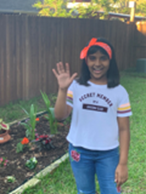
Sharanya Banerjee
The holiday season is here
Who could ask for more?
With children and loved ones near
Not a minute will be a bore!
The holidays bring children joy,
And many parents, too
But not just because of the toys
For it brings out the giving spirit in you!
So when you are opening your gifts on Christmas day
Remember the importance of love and giving; come what may.
Bio Note: Sharanya Banerjee
Sharanya Banerjee is in 7th grade
and is currently 12 years old. She loves to cook, watch TV, and hang out with
friends in her free time. Her debut chapbook, “My Unicorn is a Dove” was
published in 2020 by Blue Pencil, India.
Seema Jain (Children's World)
 |
| Seema Jain |
My Father, My Hero
Born and
brought up in a shack on a public park's premises
I have
seen my humble father tend the lush green park;
Clean up
its pathways and flowerbeds, and prune its tree branches and hedge plants,
Towing
away in a pushcart the sod, the dried leaves and the trimmed branches
And I as
a young boy help him water the plants and sprinkle water on the walking tracks,
Though I
dislike some functionaries bossing him around at times
I enjoy
the best of times watching kids, youngsters and the elderly alike
Visiting
the park at different hours and filling it with yoga, games, music and
laughter
My
father, an upright industrious man who worships work
Remains
my hero who schools me in a thousand virtues
Besides
nurturing me like a tender sapling with his infinite love and care
I learn
from him the quiet dignity even in a modest calling.
My World
I am the whole
world to my doting parents whose unbounded love is my treasure
And soaked in their infinite love and care, I cherish life in all its pleasures
I look at the world around and in my young mind float questions galore
And as some get answered, I have more and then many more.
Who painted the sky or
the ocean blue?
Why don't the fish fly, or the birds swim, or wherefrom come drops of dew?
Who plants seeds under the soil that sprout and grow into huge trees?
Who tells the sun when to rise or set and what makes the rain drops freeze?
Who made the flowers,
the butterflies, and the beautiful rainbow?
And why is that little boy at the traffic signal in rags even in mist and snow?
And I hope one day when I grow up I will try
To wipe tears of sorrow from every child's eye.
You Are the One
When I opened my eyes,
there was darkness all around
Tribulations and sufferings did my life surround
There were many kids like me given food and shelter
But sans love and kindness, life seemed all helter-skelter
Then you picked me up
and adopted me as your child
Planting a kiss on my tender cheek, you became the reason for my smile
Since then, to each and every moment of my beautiful existence
You are the one who added sparkling dreams with your persistence
The colors of the rainbow, the flowers and the butterfly
Have more meaning for me with the multiple hues of your love sublime
Without you, I would have been lost in the ocean of anonymity
You are the one, who like an angel, scripted anew my destiny.
Bio Note: Seema Jain
Satinder Kaur (Children's World)
Paper Boats
Satinder Kaur
Sitting all alone on the swing in my balcony
I enjoyed the pitter-patter of the rejuvenating rainfall
Lush green leaves of the trees around
Reflected their delight through their vibrant sounds
I see tender childhood, enjoying in the flooded street
Little boys and girls screaming in glee
Pushed their paper boats designed most artistically
Into the muddy waters thus forming a fleet.
But lo! some older champs suddenly emerged
And like seasoned warriors well-equipped with arms
Pushed in water their bigger shiny boats,
As a hush descended on the faces of the younger lot.
I enjoyed the pitter-patter of the rejuvenating rainfall
Lush green leaves of the trees around
Reflected their delight through their vibrant sounds
Little boys and girls screaming in glee
Pushed their paper boats designed most artistically
Into the muddy waters thus forming a fleet.
And like seasoned warriors well-equipped with arms
Pushed in water their bigger shiny boats,
As a hush descended on the faces of the younger lot.
A Trip to the Zoo
A dream enters my open eyes and a smile plays upon my lips
When I remember a trip to the zoo
Planned with my kids, amid some hullabaloo
Tigers, lions, giraffes and zebras, elephants, birds and coiling snakes
Rhinos, unicorns, wolfs and monkeys, all promised to make it an exciting trip.
Inside the zoo, we hired a rickshaw to reach the regions where they dwelt.
But to my utter dismay, the smart kids of the computers and cars era
Were so enchanted with the RICKSHAW RIDE
They refused to get down to watch the inmates of the zoo.
And lo! The pangs of thrill were left for the MOM and DAD duo.
Wake Up Call
Wake up, wake up, my darling daughter
The morning rays are here with a rich platter
With the sparrows chirping and the bees humming
The koels cooing and the leaves rustling
Covet your presence to be in their midst
Lo! The peacock also in full majesty
Has joined their company in great ecstasy
To receive the bunch of blessings from Nature
The gifts of God are knocking at your door
Come with an open heart and enjoy them to the core.
Bio Note: Satinder Kaur
Satinder Kaur
(MA, M Phil English, M Sc Physics) has been an Associate Professor & Head P
G Dept of English at KMV Jalandhar, with a vast experience of teaching
postgraduate and undergraduate classes for about 45 years. She had been a
member of various college and University bodies, attended many National
and international Conferences, presented and published many Research Papers.
Her recent achievements include participation in online poetry meets, world
poetry conference 4 at Chandigarh, publication of poems in Mosaic of Poetic Musings, an anthology of 138 contemporary women poets
from India, and many reputed books and journals.
Satbir Chadha (Children's World)
 |
| Satbir Chadha |
Childhood Pondering
I am at the age now which is called the second childhood, pondering all the stages I’ve lived, as a child, as a teenager, as a grown up and as a parent. As a child I remember myself and all the children with me enjoying the green environs of my hometown, the games we played and the dreams we dreamt, the ‘kutcha-pucca’ castles we built, the mischief and the punishments, but always the yearning was to be outdoors. We all shunned the walls and doors, and looked for escape, unmindful of the weather. We knew of ways to enjoy all weathers with the specific features they offered, like floating paper boats in rainwater pools, and flying kites in the sultry pre-monsoon. Some changes in nature that happened in different seasons made us curious, like the rows of ants rushing in single file, specially after one friend’s grandmother told us that they were going home because it was going to rain, and that was for us a great wonder that the tiny ants knew what big men didn’t.
The focus throughout childhood though, was on food, nothing was acceptable to me if my tummy rumbled, neither the best toys, nor the best friends. Mangoes hanging from tall trees were the most fascinating sight, and still is, climbing up to the terrace of the neighbours’ house to pluck and suck at juicy tangy tamarinds, jumping up for home grown peaches at the bare hint of pink on them, these were our favorite pastimes.
It is the earliest learning of a baby, to look for a teat and start sucking, it is born with the knowledge that it needs food. Then as we grow, we try to collect and hoard more food than we need, particularly what we like, for a natural instinct teaches the child that it is going to need food again. Even before he or she learns to speak, the child learns to discern between palatable and unpalatable foods, picks up the aroma and feel of the different foods, involuntarily turning towards them. As they grow, they just know from sniffing that milk has been boiled and ‘çhapattis’ have been baked, if you look closely, you will recognize the satisfaction their little faces show, their natural inborn reactions. No colourful rattles and no theatrical antics by you will amuse the child who is hungry, show him a cookie and he will grab it, though nobody taught him about it.
I would love to tag along to the milkman’s shelter with my Granny when she went to buy milk, for I loved the frothy spray of rich milk streaming into the pail, I would sit enthralled till the bucket was full, and pranced all the way home, though by then I had outgrown the taste of milk. Though I enjoyed the festival of Holi immensely, even the coloured water sprays we played with did not excite me as much as the milching. Milk meant food, all the mouthwatering desserts, custard, ‘kheer’, ice cream and ‘mishti dohi’.
Even today my grandchildren cling to me more than anyone else, they love what I cook for them. They are not as tantalized by fancy clothes or mechanical puppies as they are in my modest kitchen. My youngest granddaughter often comes down saying, “Dadimaa please let’s bake a cake,” or “ Dadima I want to eat mashed potatoes” or it could be a cheese pizza or pasta with white sauce, or plain Roti with butter, which are her favorites these days, previously she would love ‘parathas’ and French toasts. Food is the biggest connect between my grandchildren and me, each having their special choices, so while one would love ‘Methi ki sabji’ with unbuttered Roti, another one loves the sugar stuffed sweet ‘parathas’.
When I went to the Chittaranjan Park fish market, my two little granddaughters would come along, what fascinated them in the beginning was the large baskets of crawling crabs, and then the different types of fish. They learnt to identify the different fish and developed a taste for each. One visit they both badgered me to buy pomfrets, they wanted me to fry them whole and they both wanted two each, while another time they chose a large ‘Sole’ fish for they wanted to slurp on the soupy gravy with toast. They are both professionals now, but they insist that their best memories of childhood are of the lovely foods fed to them by Dadimaa.
Delectable and enticing food has more power over children than anything else. Everyone knows how kids are overjoyed at the sight of chocolates and chips, ice creams and lollies, but an episode with my cousin is the most eloquent, his little daughter had got a deep cut which needed stitches, and the doctor asked him to make sure the child sat still, an impossible task. But my cousin went and got a box full of Cadbury chocolates, which the child ate one by one and was adequately distracted from the Doctor’s needle, such power they had.
Children also have an inbuilt thermometer for discerning
different emotions, and most of all they intuitively know honesty from
dishonesty, who actually loves them and who pretends to love them. They may not
react, for, very early in infancy they have learn to fear adults, yes fear is
the first emotion they pick up from voices, expressions, even imperceptible
vibrations which only they can perceive. Sadly man has become the most feared
species, in the domain of earth, water and air, causing the most damage.
All said and done, childhood is the best period of one’s
life, and I’m sure somewhere sometimes or at all times, we all feel a craving
to be kids once more, when the world seemed to revolve around us, when
everybody loved us, and when we could love everyone, the serpents of hatred,
jealousy and avarice was unknown to us.
Bio Note: Satbir Chadha
Satbir Chadha is the author of the highly acclaimed book, “For God Loves Foolish People”, for which she was awarded the Reuel International prize. Her second novel is “Betrayed, tale of a rogue surgeon”, a medical thriller. She has been published in over twenty national and international anthologies, containing poetry and short stories. She has three solo poetry collections to her credit, “Breeze”, “Glass Doors”, and the recent “The Last Lamp”. She was awarded the Litpreneur Award by Authorspress for her contribution to literature.
She is also the founder of the NISSIM International Prize for Literature, awarded every year to upcoming writers of English prose and poetry.
Santosh Bakaya (Children's World)
 |
| Santosh Bakaya |
Hues of Nature
“I am so great, you know, look at my muscles.”
Said the skinny rat, creating a lot of hustle- bustle.
“I love nature, and am fascinated by the rustles
of the leaves; who is bothered about ego tussles?”
Said the spunky squirrel, her whiskers, shining bright.
While a group of impish boys ran after a falling kite.
The squirrel stood on its hind paws, looking at the rat.
Wondering at the vanity of the shriveled up ratty brat.
“What do you find nice in nature?” the thin rat sneered.
When out of the blue, a glossy, black raven appeared.
“Nature is all around you, don’t you have eyes to see?
Trees, flowers, busy bees and even the
so- called evil me?”
The hullaballoo over an Owl
“Oh no! Oh no! There is an owl in
the house.”
Squealed the highly indignant and fat mouse.
“Hey! How can a meek owl be anyone’s grouse?
Strange! Why can’t you understand this, you louse! ”
“Did you just call me a louse, how unfair and foul!
You are an intruder, you burglar! You
stinking owl!”
“I just lost my way in the dark.” Meekly, the owl pleaded.
“Ha- ha, owls can see in the dark,” its plea went unheeded.
The mouse picked up a stick, swinging it like a conductor’s baton.
Shrieking, “you monster of the night, leave the house – be gone!”
Fluttering its wings, the poor owl
swiftly flew out of the house.
But, in revenge, unleashed a string of bird- droppings on the mouse.
The Penguin with the Hat
A penguin had somehow got hold of a tattered old hat.
He put it on his head, and walked with a strut, and fell flat.
His kith and kin witnessed the scene, and broke into grins.
Complained the penguin, ‘’blokes, you will pay for your sins.”
“Don’t curse us,
don’t you know, laughter is the best medicine?”
“Laughing at the expense of others, creates nothing but a din.”
Rejoined the highly indignant, by now hat- less, morose penguin.
Said one, “Don’t be sad, friend dear, come let me play the violin.”
Remarked another,
“With a song, let me transport you to Mars.”
“I care two hoots for your violin- playing, you are no singing stars.”
Opined another, “Forgive us, we are friends through thick and thin.”
This quickly quelled the storm raging within the heart of the penguin.
Bio Note: Santosh Bakaya
Recipient of Reuel International Award for poetry, [2014] Setu International Award, [2018], essayist, poet, novelist, biographer, TEDx Speaker, Dr. Santosh Bakaya has been internationally acclaimed for her poetic biography of Bapu, Ballad of Bapu [Vitasta, Delhi, 2015] and Only in Darkness can you see the Stars [A Biography of Martin Luther King Jr. Vitasta, 2019]. Her twenty three books published across different genres have been well- received.
Her two collaborative e- books: Vodka by the Volga [with Dr. Koshy, Blue Pencil, 2020], From Prinsep Ghat to Peer Panjal [with Gopal Lahiri, Blue Pencil, 2021] have been Amazon # 1 bestsellers.Roopali Sircar Gaur (Children's World)
 |
| Roopali Sircar Gaur |
Dangle Wangle the Grasshopper
Dangle Wangle the Green
Grasshopper
Jumps and hops on the clean
green grass
His legs are long his eyes
are sharp
He loves to play and sing
with a harp.
To hop and jump
Jump and romp
He needs a lot of space.
He jumps and hops
Hops and jumps
a bright smile on his face.
Ant Andy saves
some Candy
for a rainy day
slow and steady
slow and steady
he walks all the way.
Dangle wangle laughs
and shouts
It’s the month of May
It won’t rain
You work in vain
Why should you
Take so much pain.
Ant Andy
there’s plenty of candy
Why do you
store for more?
Ant Andy you’re a fool.
I don’t follow any rule
I don’t even go to school.
When thunder shouted
oh so loud
drops of rain fell
from the cloud
Drip drop drip drop drip drip
drop
Dangle Wangle got so wet
He did not have a place to
stop
He could not just jump or hop
Ant Andy stayed at home
he did not want to roam
He stretched his little feet
On a bag of candy sweet.
Outside the rain went
Drip drop drip drop drip drip
drip.
Wet and hungry
Dangle wangle
learnt the rule
and when the rain
and thunder stopped
Dangle wangle
to school he hopped
now the Lazy
Green Grasshopper
worked like Andy for his
candy
And soon became the class
topper.
Porky the Porcupine
Porky porcupine
Shakes his quills
Down his spine
Like needles of pine
His nose can smell
and he can tell
carrots potatoes
turnip and roots
under the ground
Looking for shoots
If he is found
He quickly moves
making a rackety
tackety sound
the quills shiver
Like arrows in a quiver.
Bio Note: Roopali Sircar Gaur
Roopali Sircar Gaur, Ph.D. is a poet, writer, and social
justice activist. She was Associate Professor of English at Delhi
University and taught Creative Writing at the Indira Gandhi National Open
University. Her book The Twice Colonised:
Women in African Literature is a seminal text on gender, ageing, war,
disability, and post-colonial literature. Her poetry is included in several
international anthologies and is archived in the Stanford University
Pandemic digital archives. Since 2020 she has co-edited four international
poetry anthologies. She is Consultant Editor and columnist at Different Truths, a global participatory
social journalism platform; and Poetry Editor for the AWS Ezine.
Subscribe to:
Posts
(
Atom
)